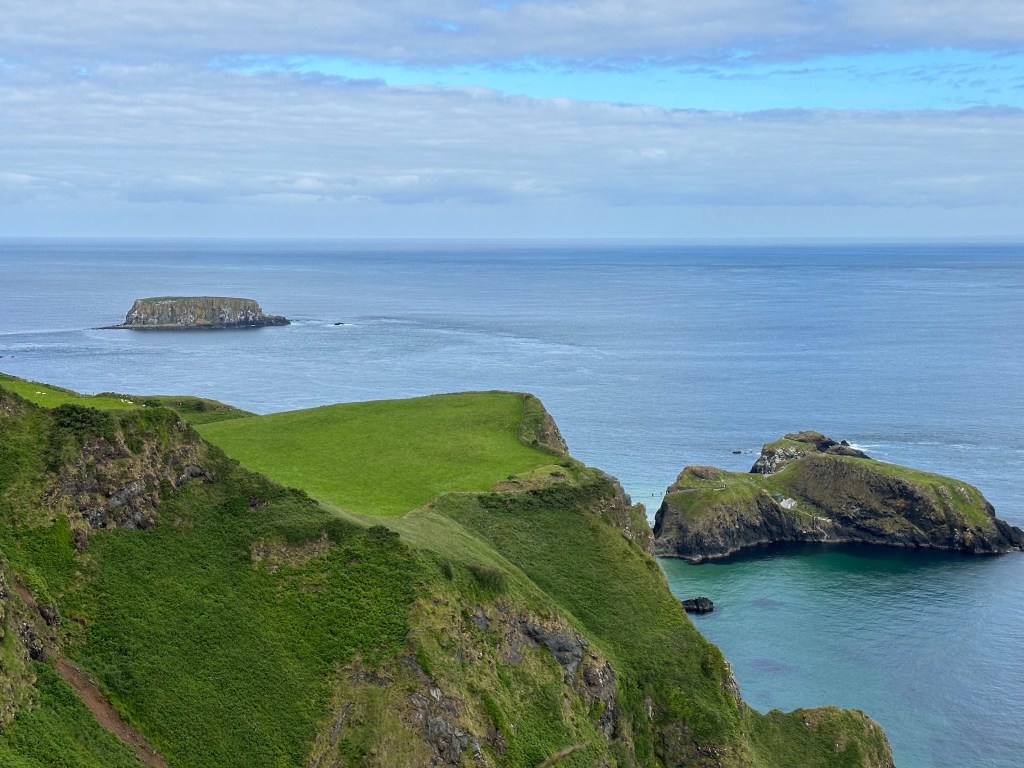
Remember COVID? Remember when everything shut down and nobody was allowed to travel (more or less) and borders were closed? We live in Washington state, and on the first week of April 2020, we were going to go on our first international vacation as a family, to Puerto Vallarta, Mexico. You can probably guess how that all turned out (if you guessed us sadly drinking Coronas and tequila in our kitchen instead, you would be correct).
Since then, we’ve made it our goal to travel as much as financially and professionally possible. I get unlimited time off (for a given definition of unlimited – it works out to 7-8 weeks of time off not including holidays) and my husband works in education, so he gets a fair amount of time off too. Unfortunately, his time off is also all at peak travel times, so we end up paying a bit of a premium whenever we go somewhere. In the last several years of deal searching, I’ve found that the last two weeks of June are inevitably cheaper to fly than any other time in the summer, so this is the second year that we’ve closed out the school year and immediately jumped on a plane to Europe. Last year was Italy, and this year was Ireland!
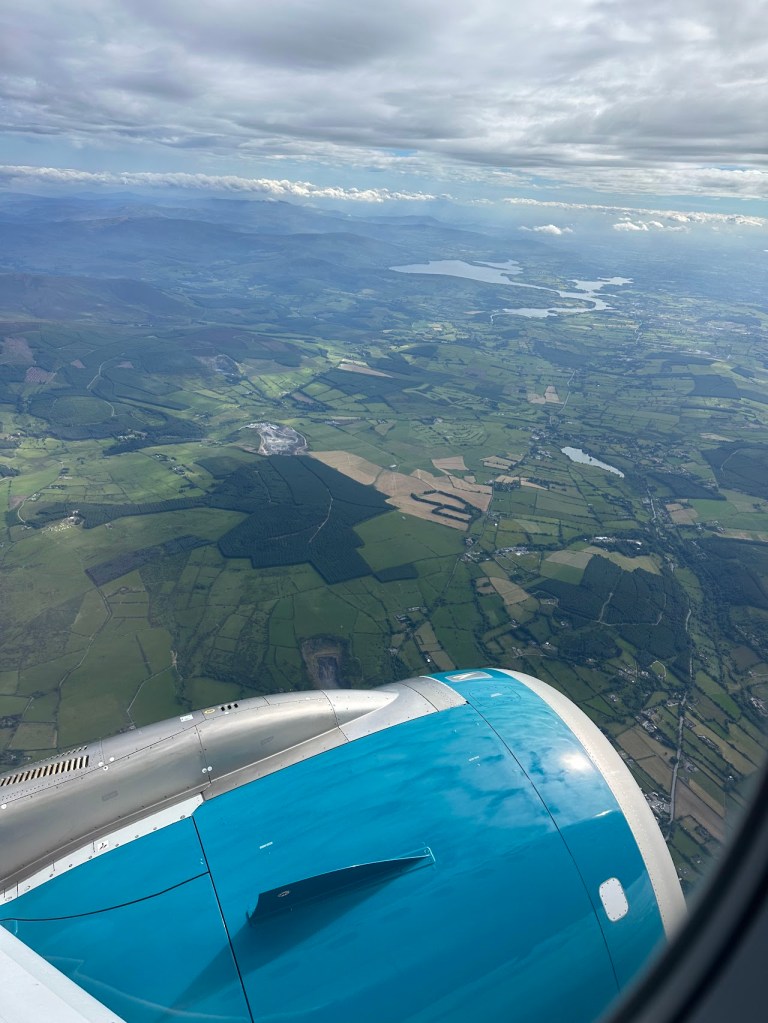
We had such success with an action-packed trip to Italy, where we bounced all over the country spending a few days in each place, that we took the same approach here. Our itinerary had us landing in Dublin, spending a few days there, then bouncing from Cork to Limerick to Galway to Belfast to Derry and then back to Dublin to return home. We stuck to this itinerary, though there were a couple misses along the way.
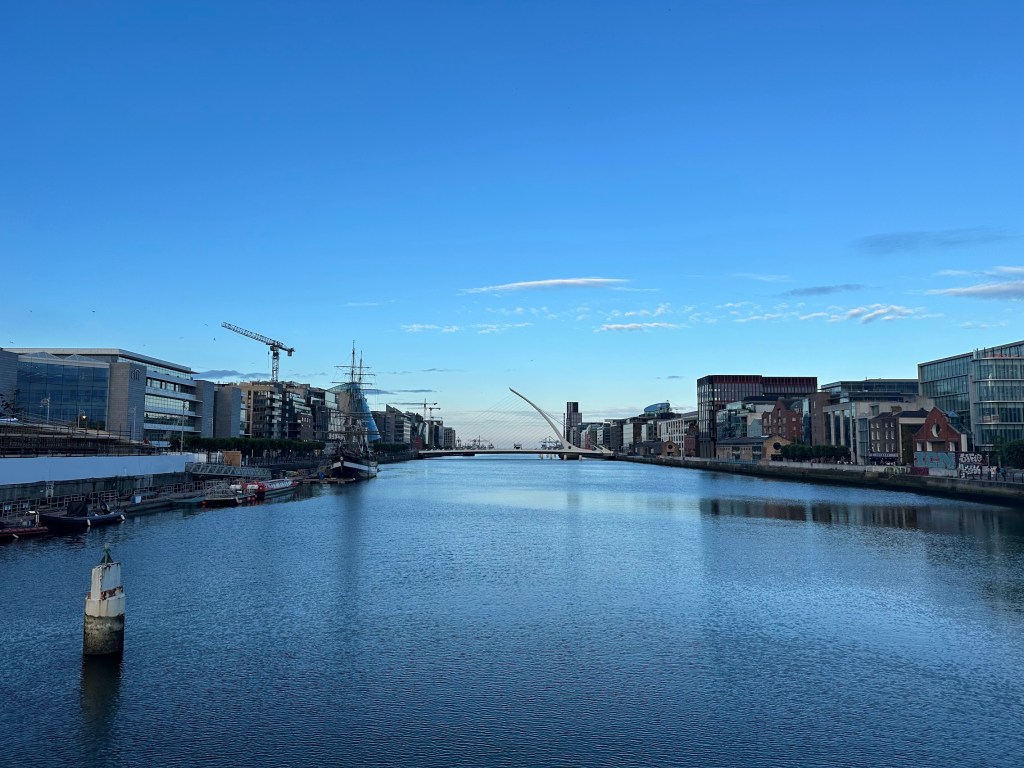
Dublin was interesting. I expected to like Dublin the most out of all the places we were going, mostly because of its size. Instead, I found it to be really similar to Portland, which was a little disappointing – not because I dislike Portland, but because I’m looking for novelty when I travel out of the country. Dublin was a mid size city but outsized for the area (much like Portland) with a solid but not enormous tech scene (much like Portland) and an absolute ton of drunk tourists (here they differ from Portland).
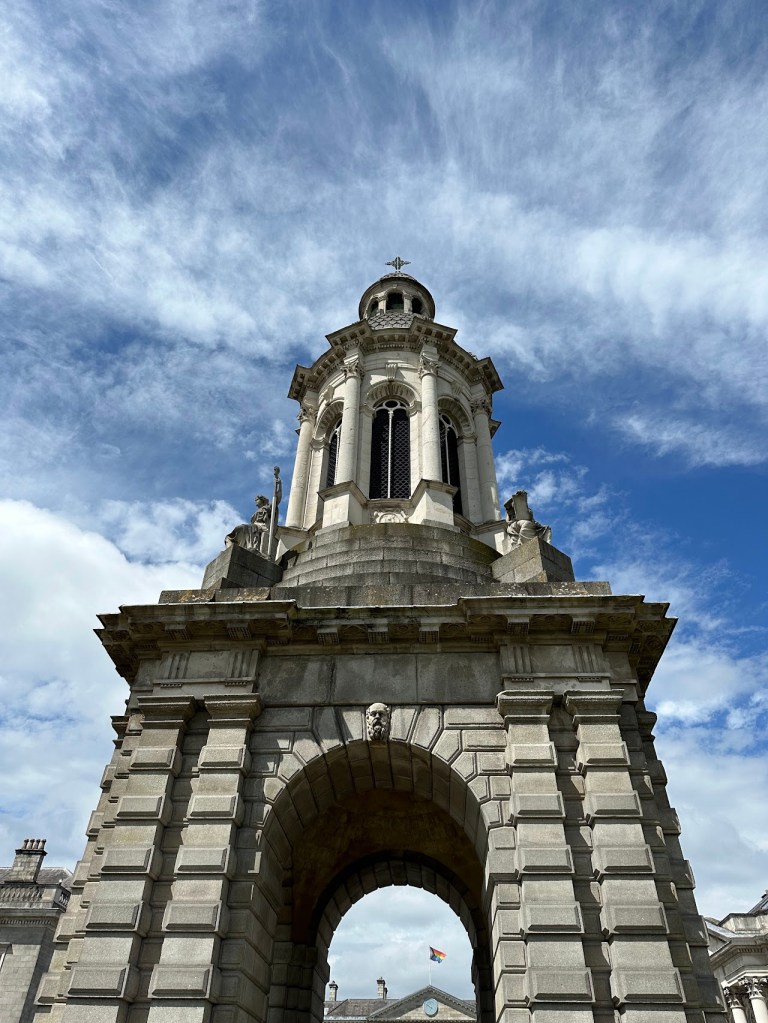
We paid for the self-guided walking tour of Trinity College. The little snippets of history on the tour app were interesting, but I wouldn’t say what you got out of the app was worth paying for it per person – probably I could’ve shared the gist of the explanations with my husband as we wandered around.
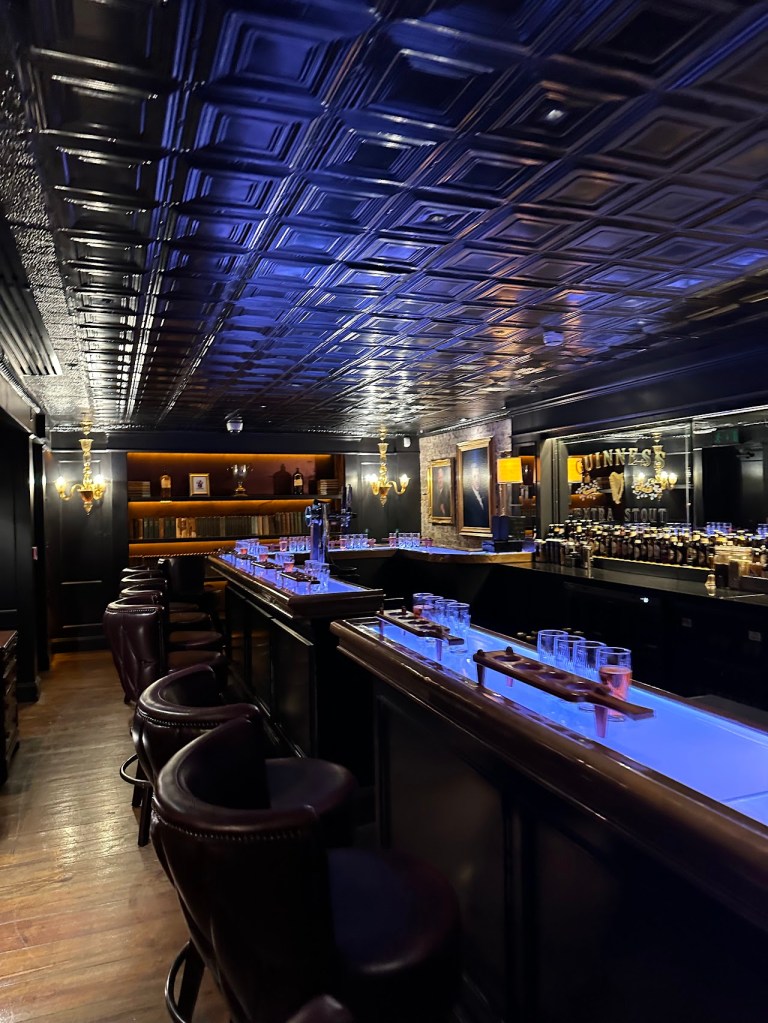
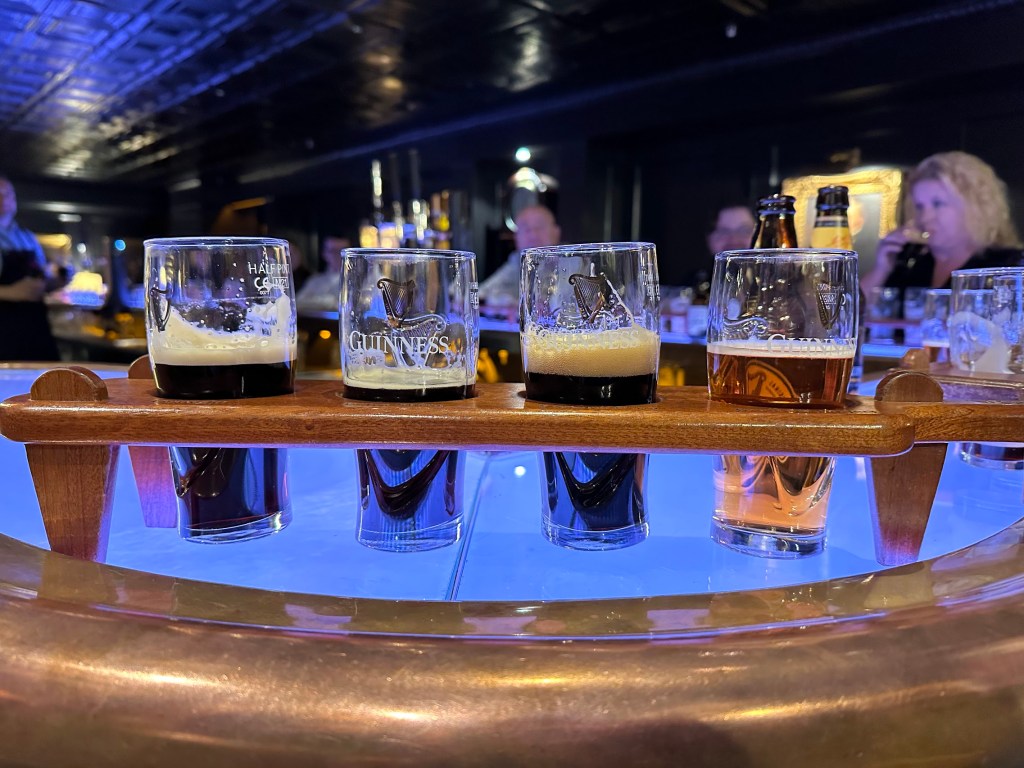
A friend of mine had been to Dublin last year and recommended the Connoisseur Experience at Guinness so we had booked that in advance. When we walked up to the Storehouse, there was a long line with no appreciable signage, so we got in line. Eventually, an employee walking through the line asked if we were there for the regular tour or another one, and, upon hearing that we were there for the Connoisseur Experience, whisked us past the line and into the building itself.
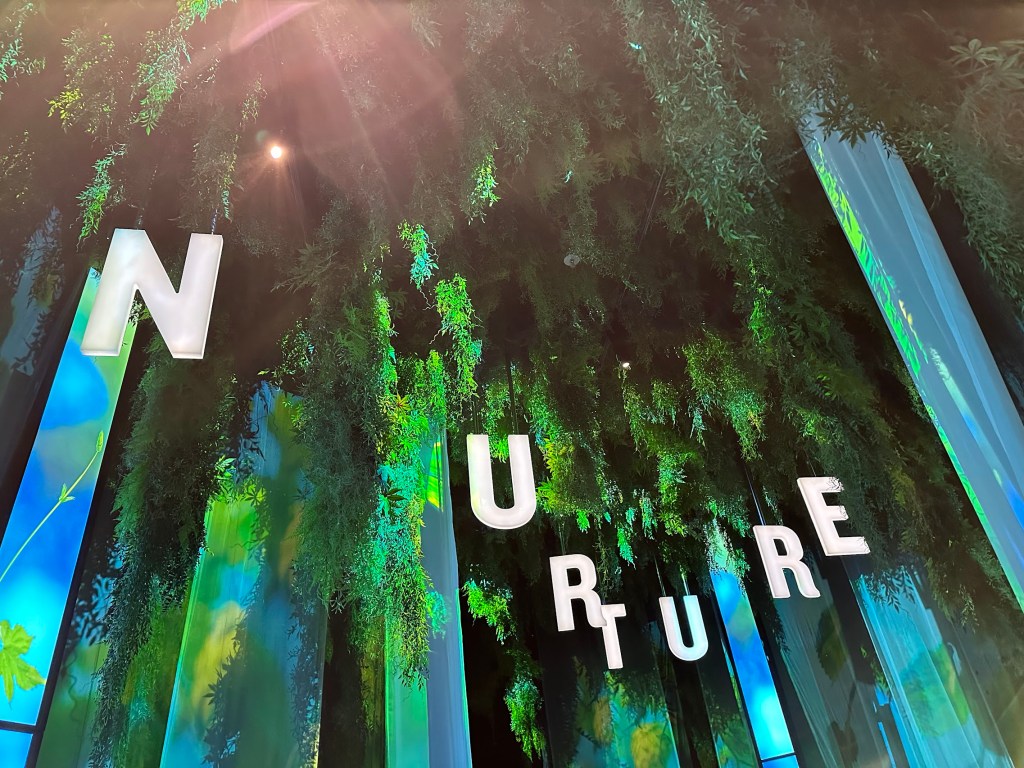
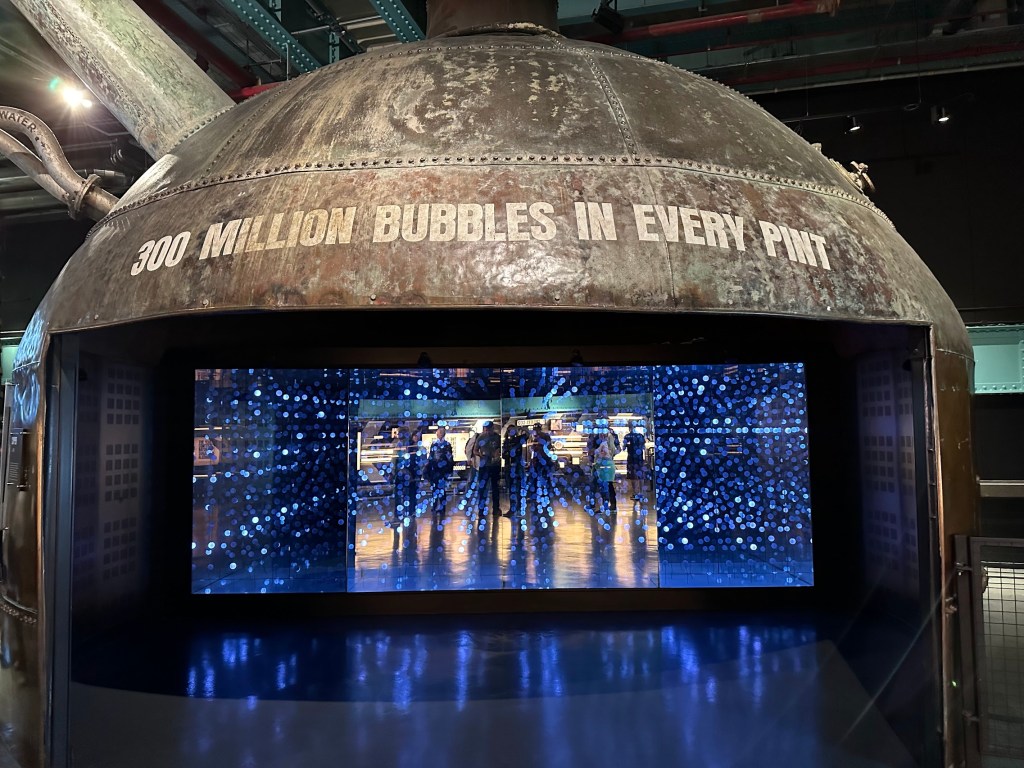
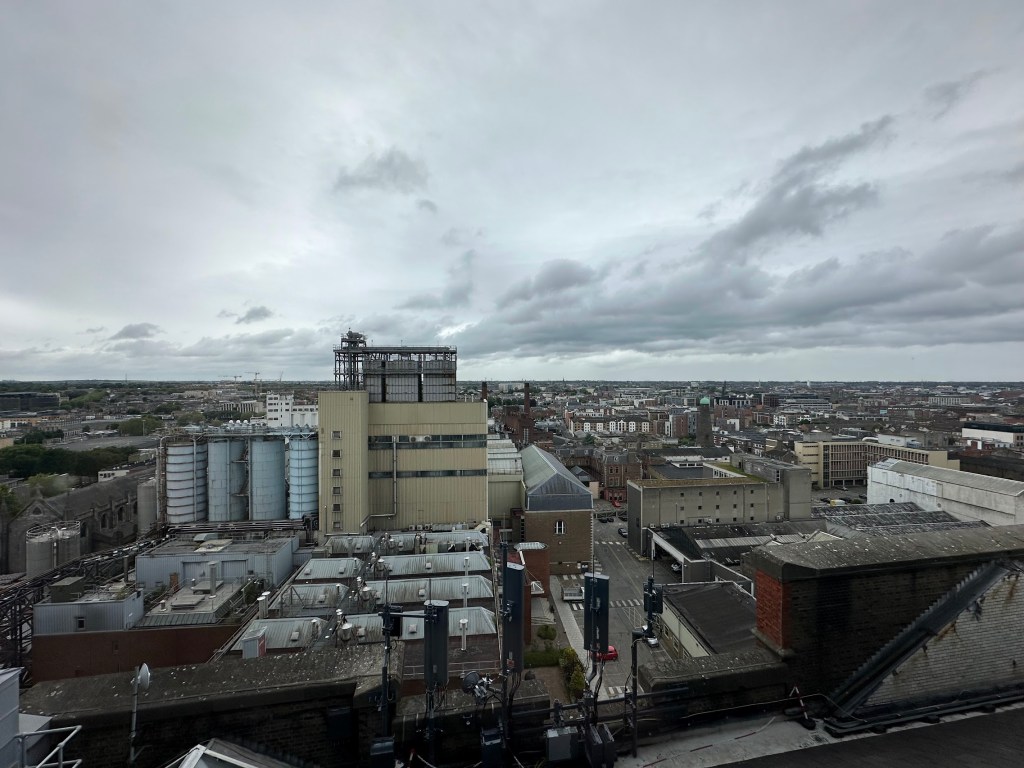
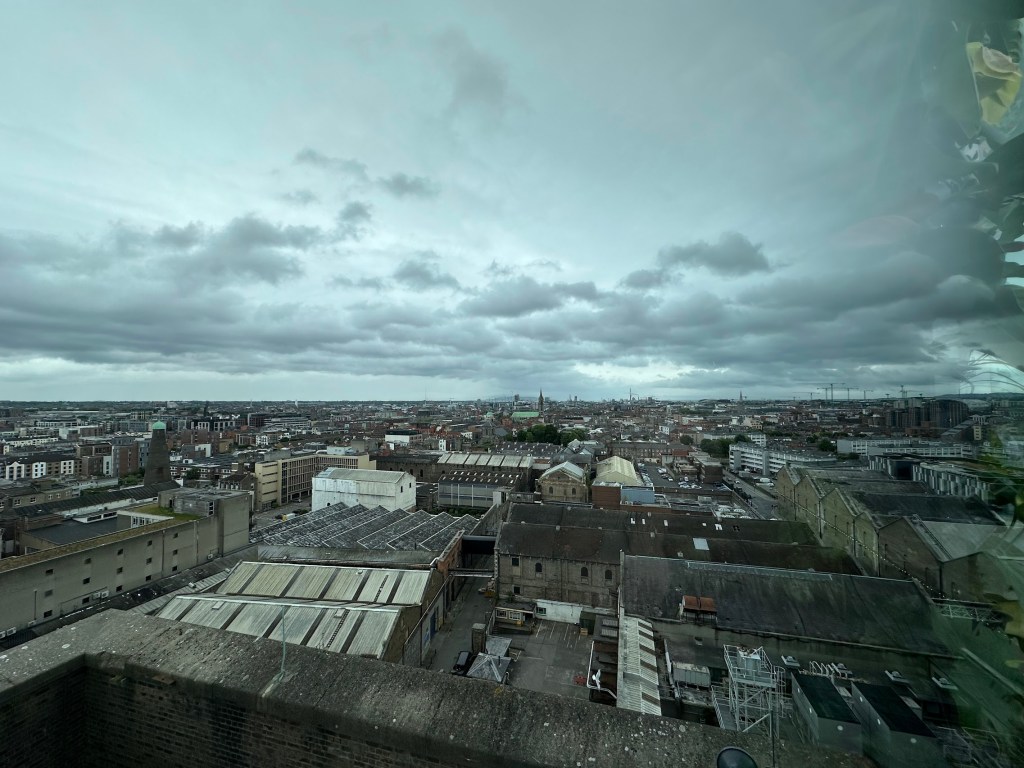
Once inside, it was immediately apparent that the Guinness Storehouse is the Disneyland of Guinness. Multiple levels, very flashy and curated, and overall, highly entertaining. Our particular tour took us out of the crowds and into a small, private room set up like a bar. Our host took us through a flight of different Guinness beers, explaining the history of the beer and the production, and finished with teaching us how to correctly pour a Guinness. It was a really great experience and added a lot to our enjoyment of the overall facilities. Afterwards, we went up to the top floor and enjoyed the view, though we didn’t take advantage of the two free pints we had tickets for as we were already a little tipsy at this point.
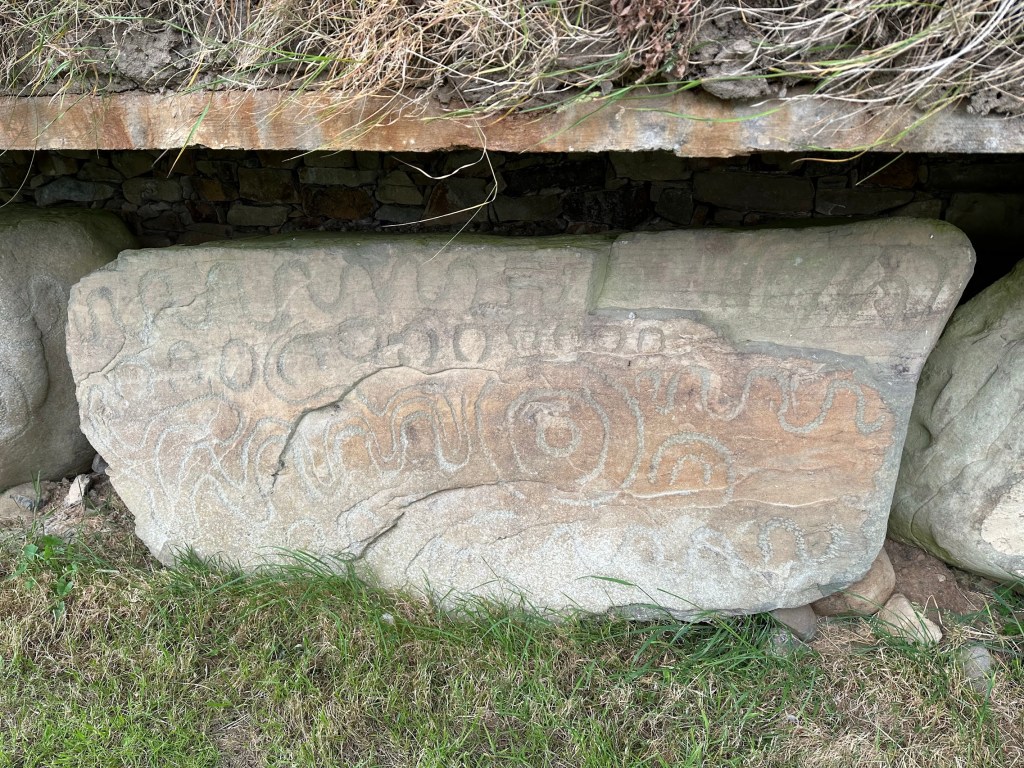
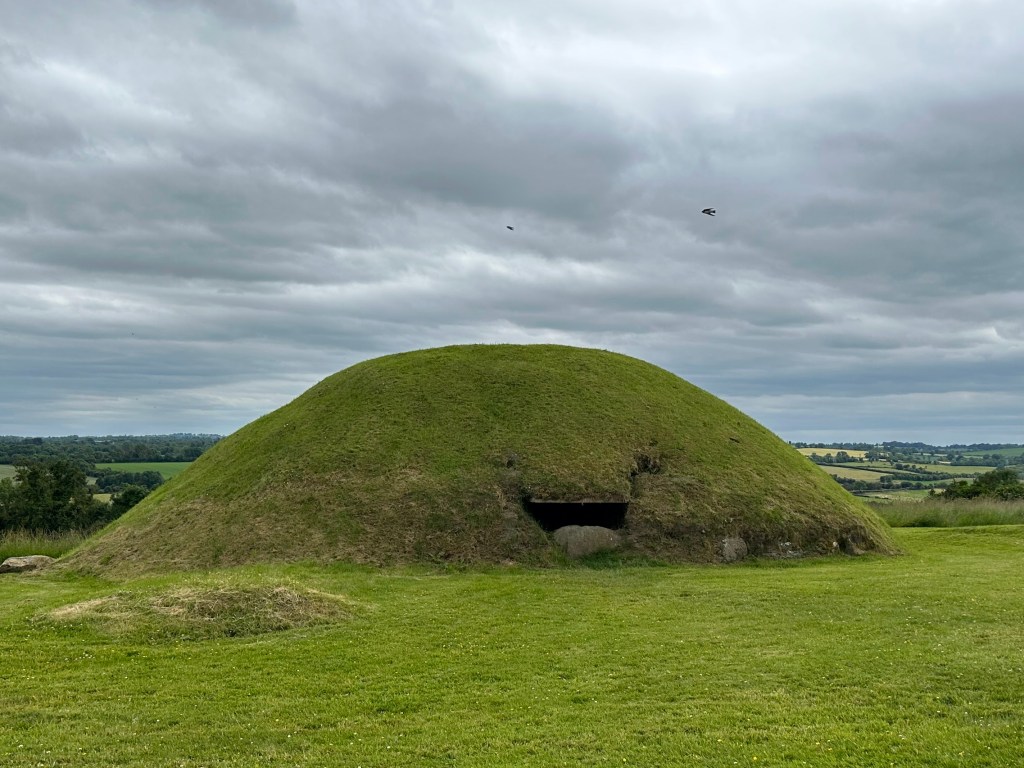
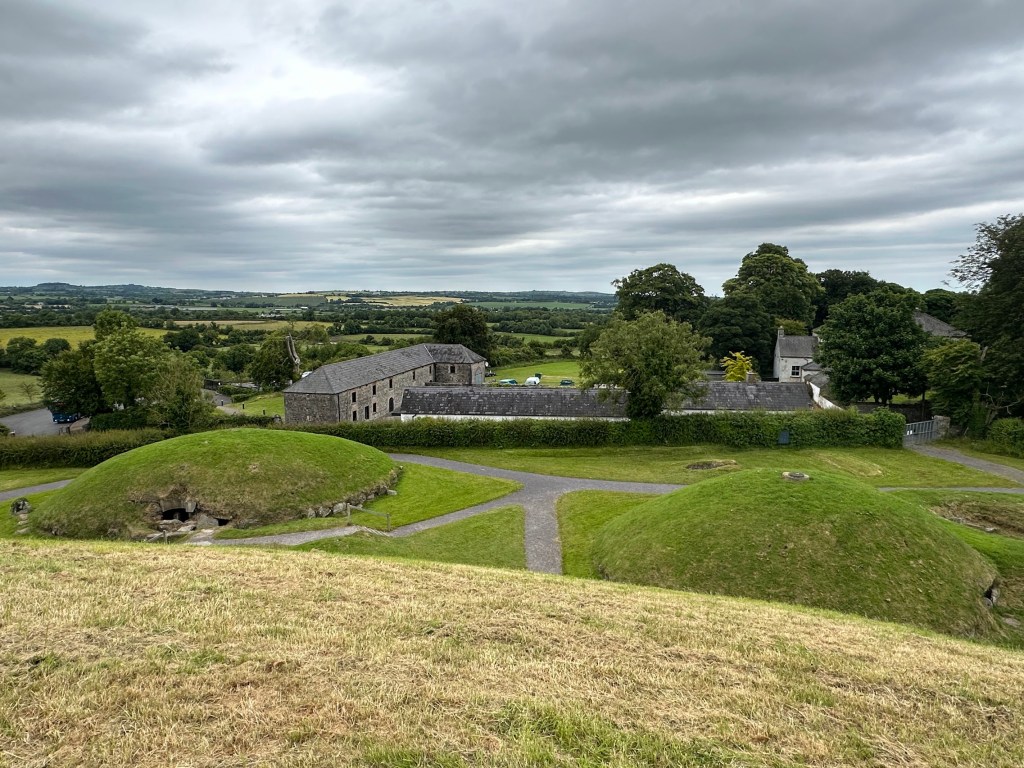
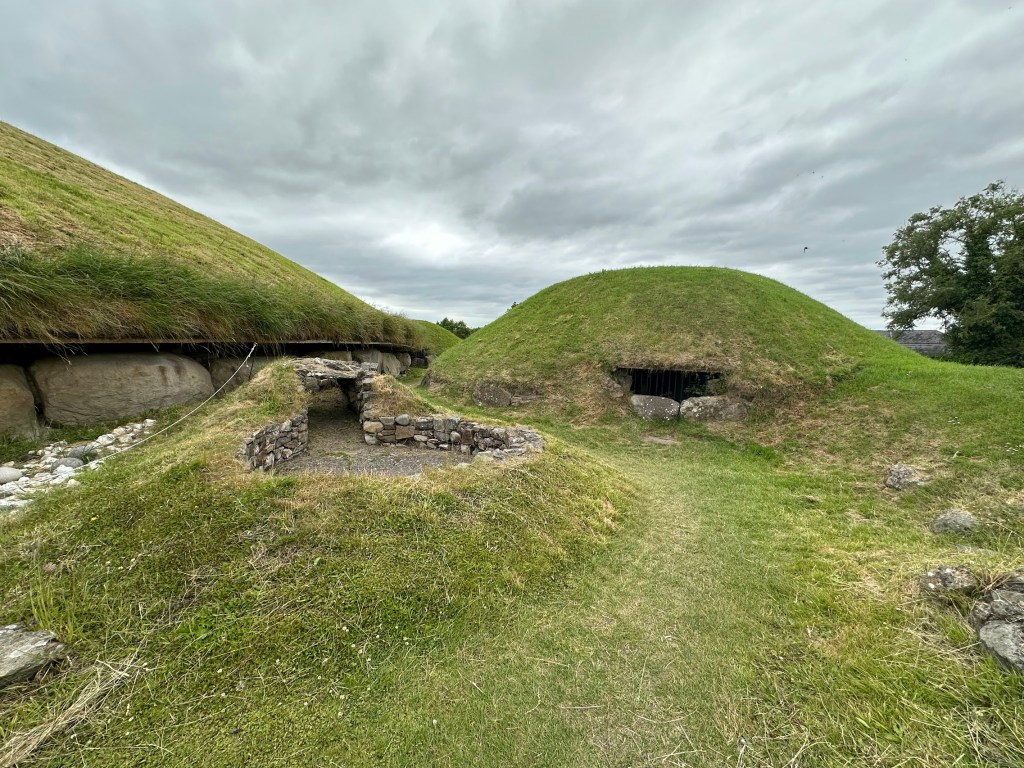
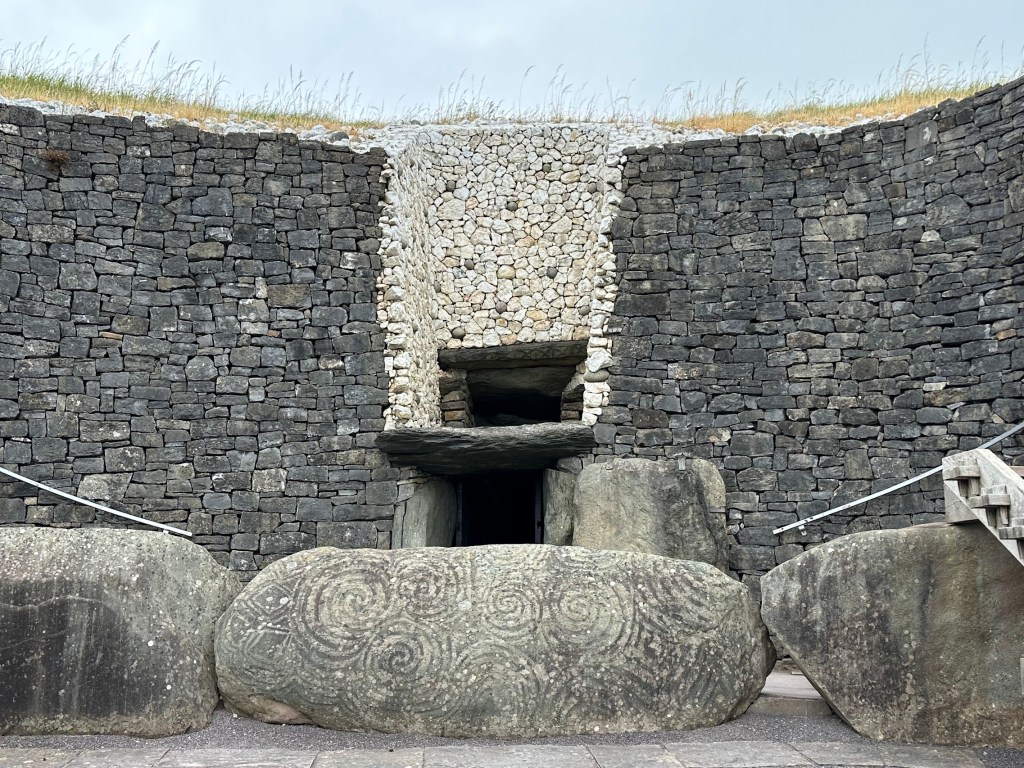
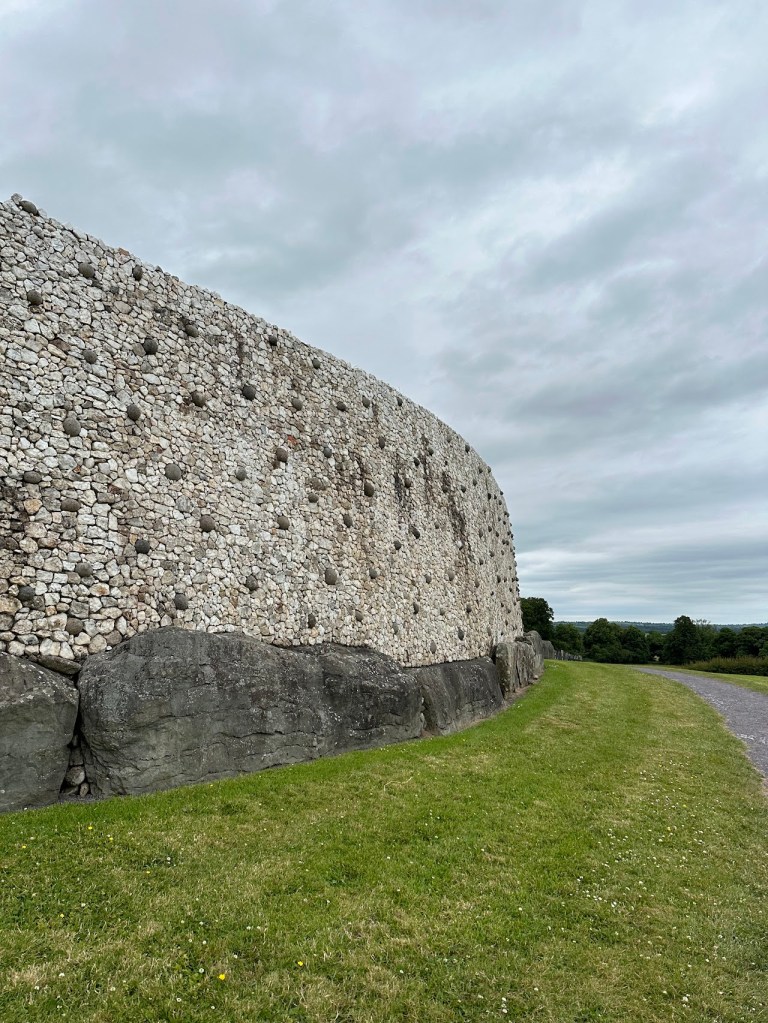
Not too far outside Dublin is Knowth/Newgrange, two locations of neolithic burial mounds. I’m fascinated by how long humanity has been on Earth, and especially leaving pieces of ourselves behind, so visiting the burial mounds here was a top priority of mine for this trip.
We rented a car for about half the day, which gave us the chance to experience driving on the “wrong” side of the road. In short: it’s alarming. Very alarming. But we got through both highway and local road driving without incident.
The tour we booked through the official website was very affordable and included a walk through the small museum, the shuttle ride to both burial locations, and the expertise of a couple guides once you arrived at the locations. At Knowth, you can walk on top of the largest burial mound (using stairs to get to it) and at Newgrange, you can go inside the largest burial mound, though no photos are allowed. It was fascinating and very cool to be so close to such ancient pieces of history.
One of my favorite things about traveling in Europe is the use of trains. Amtrak has an abysmal reputation, at least in my part of the US, and it’s never my first thought when I think of getting myself from point A to point B. Though Ireland’s rail system was not as robust as Italy’s, it was still great and I enjoyed our 2.5 hour train ride from Dublin to Cork.
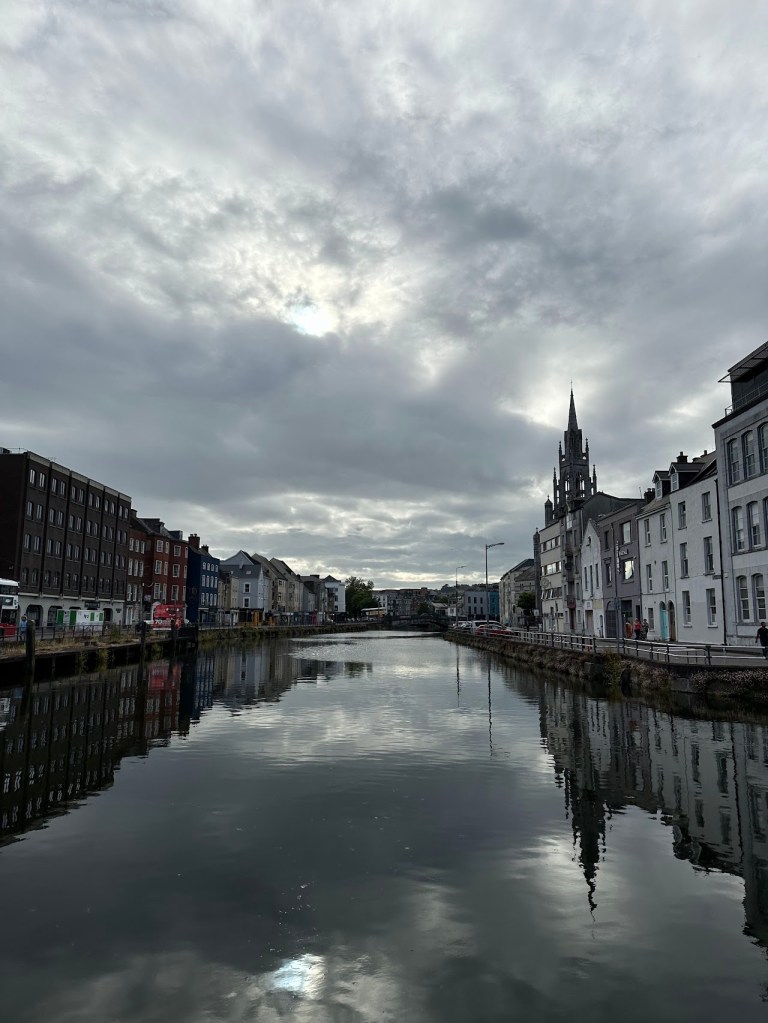
Cork was an unexpected delight. I didn’t really know much about it, and the only big plan we had for our stay there actually took us out of Cork and into the countryside, to a small town called Midleton that houses the distillery that makes Jameson, Powers, and other Irish whiskey brands. So we arrived in Cork with no expectations and found an adorable, walkable town with a very cute downtown area, two interesting markets, and a split river whose level rose and fell dramatically with the tides.
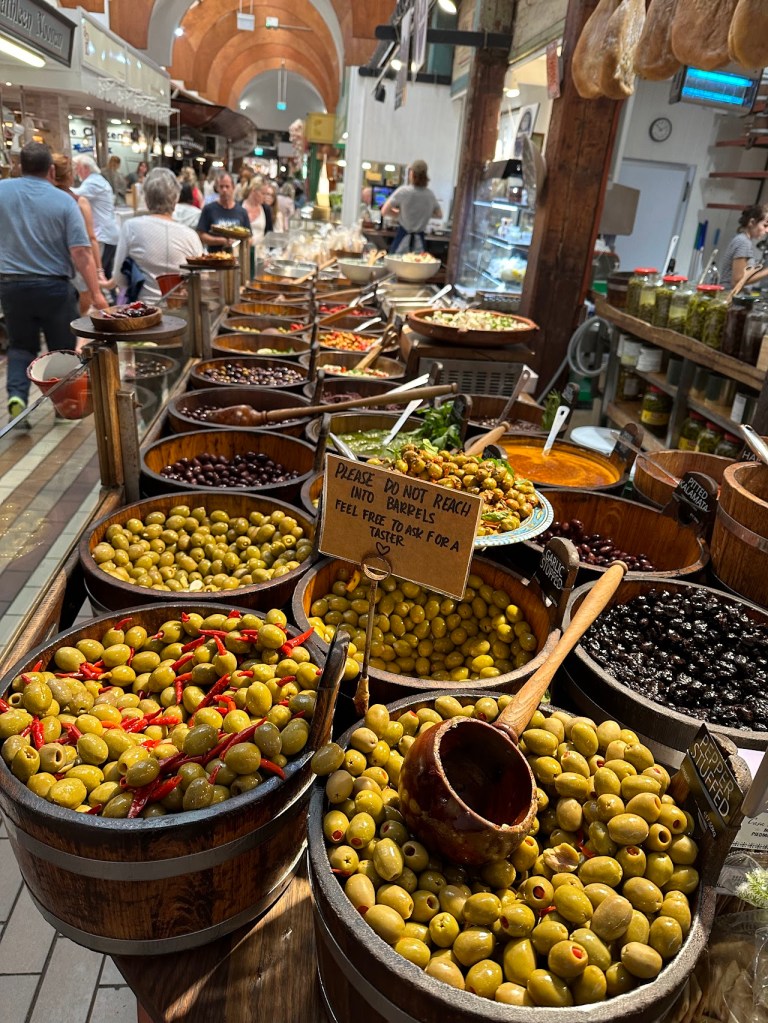
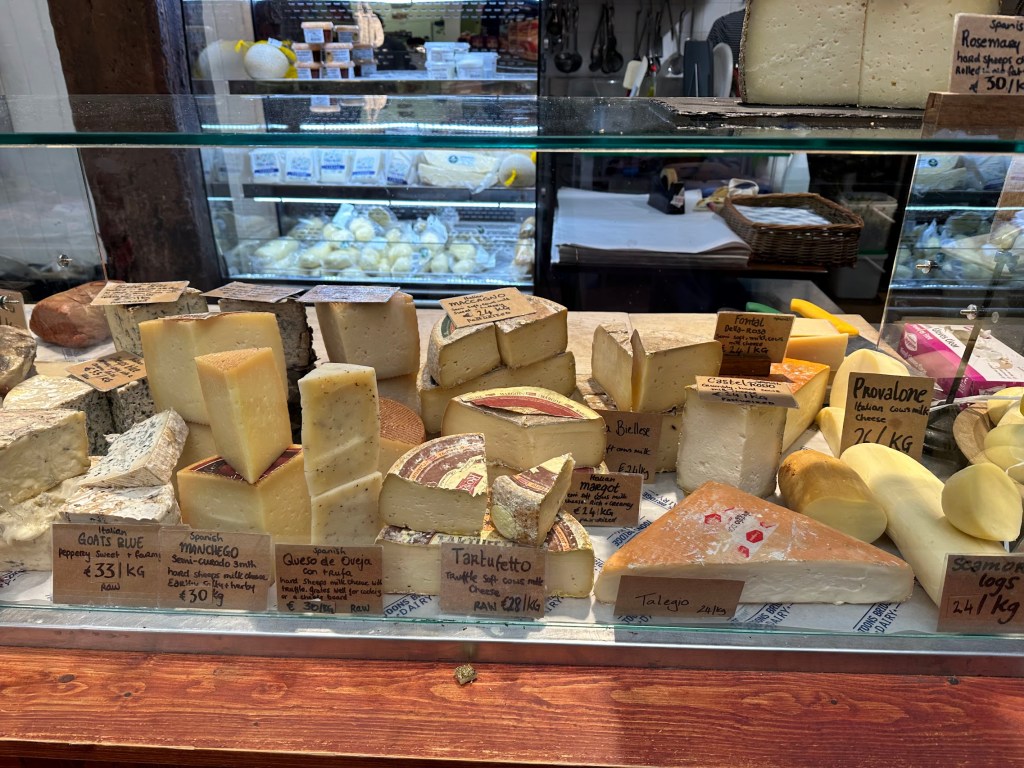
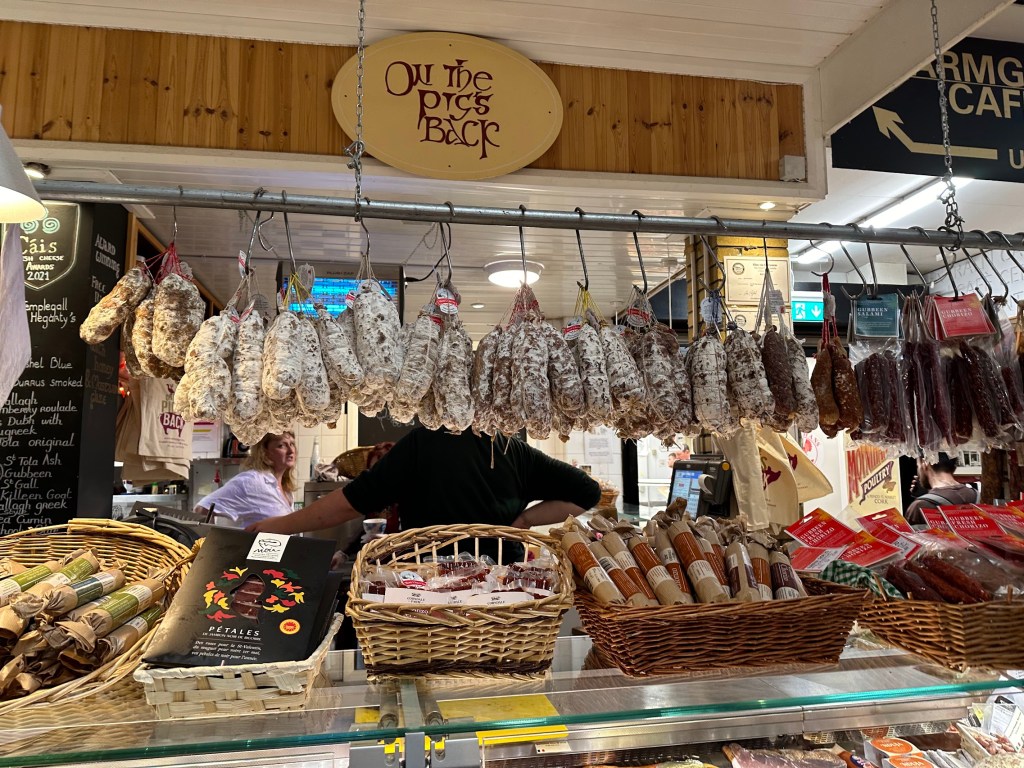
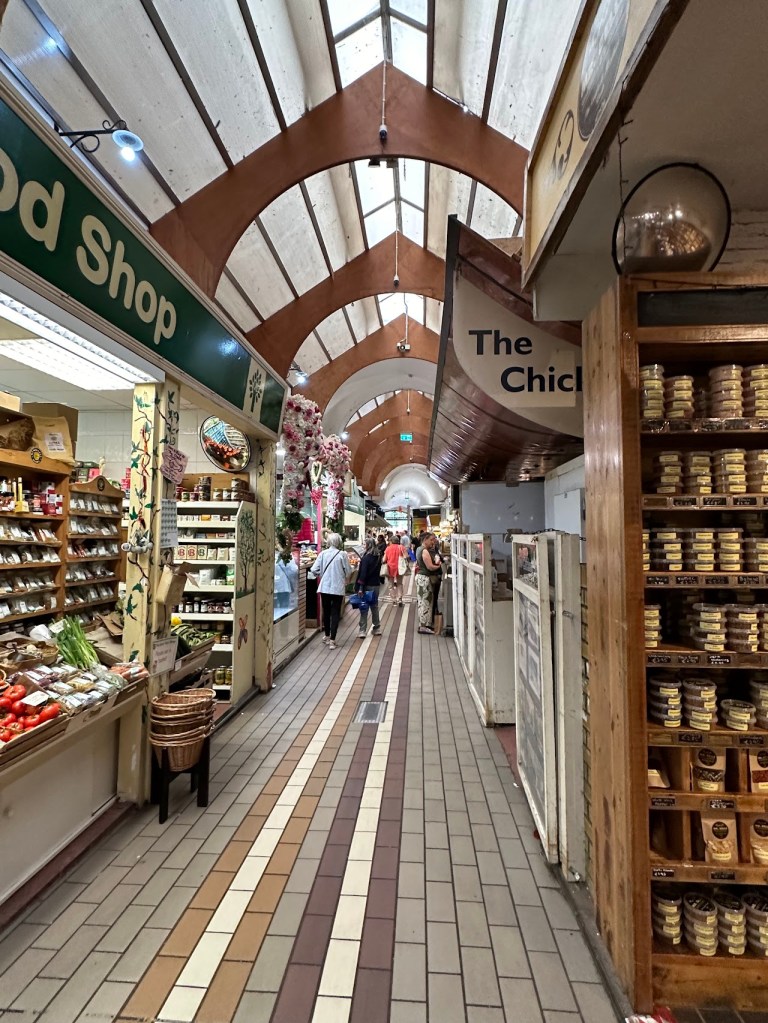
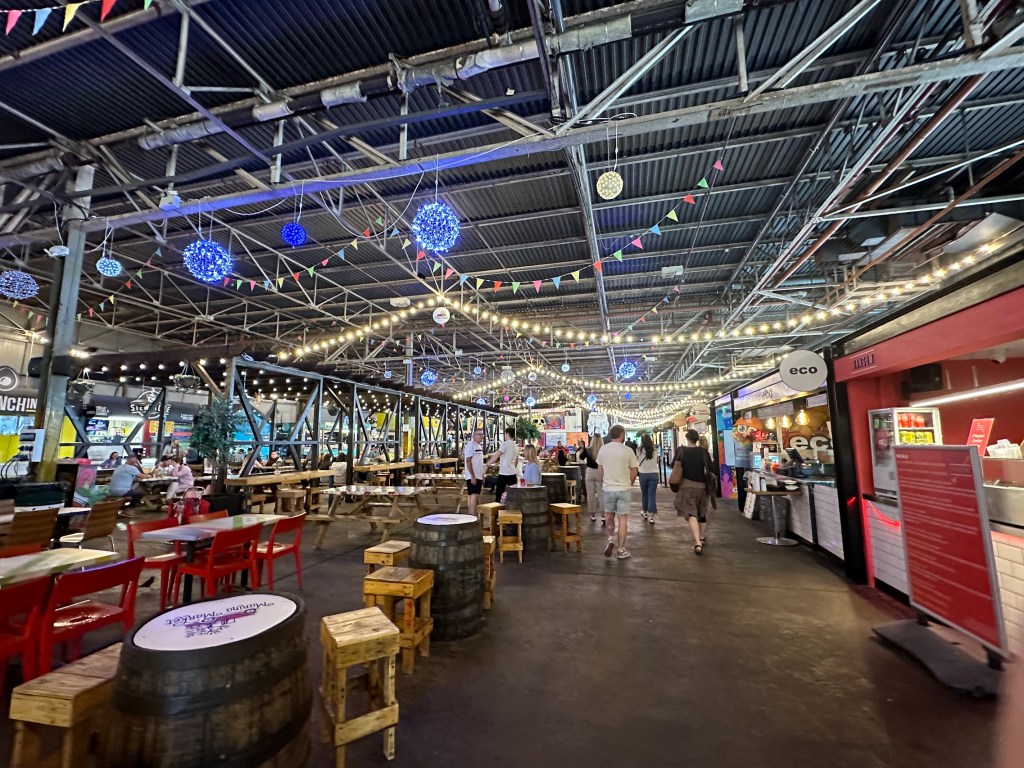
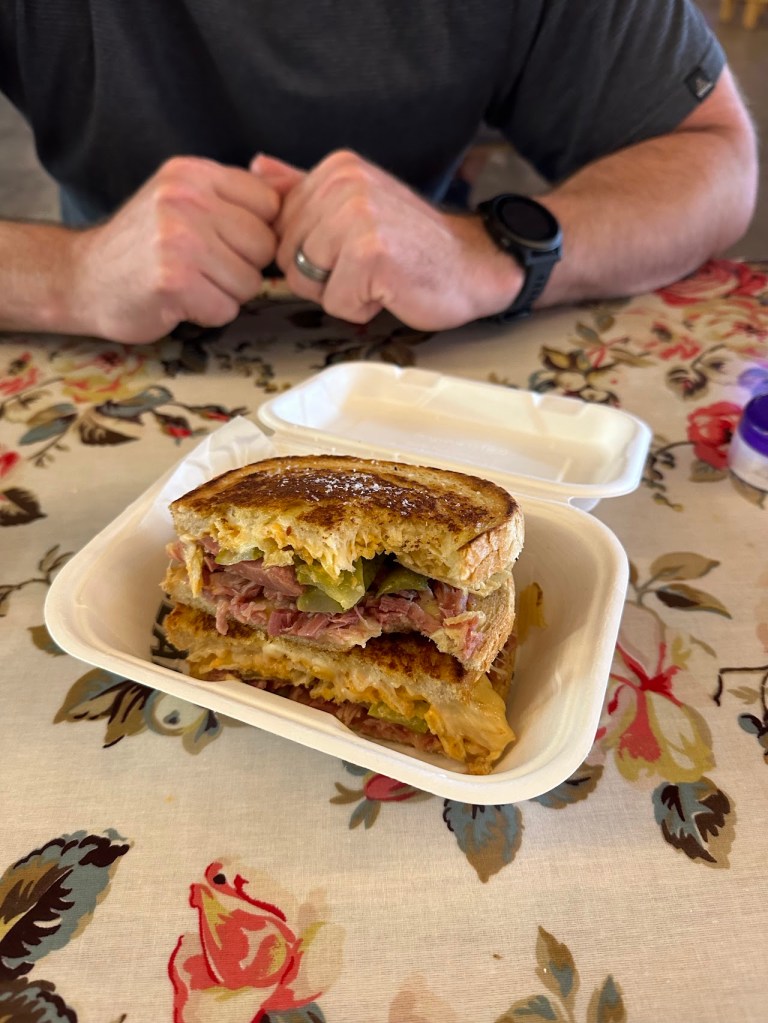
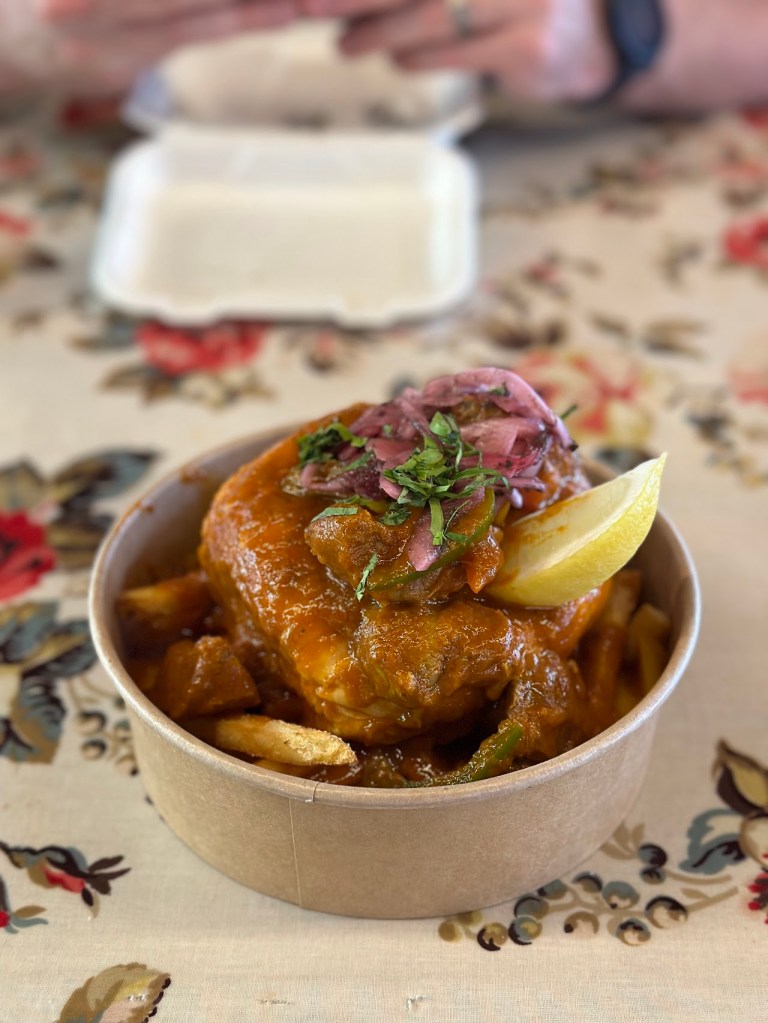
The English market is more famous, having been established in 1788. It was full of quaint small shops and tons of delicious food. We bought some olives, cured meats, mustard, and preserves. The Marina market is newer and clearly part of a push to revitalize that part of the city – Google maps took us through a route that had us tromping past sketchy partially demolished buildings and overgrown construction sites, so when we turned the corner and found a large warehouse filled with all sorts of food and tons of seating, we were a little surprised at what a gem we had walked into. I tried a new dish to me from South Africa called Bunny Chow (it was amazing) and my husband had an elaborate version of a cheese toastie (which was also amazing).
Somehow, I missed that there was a regional train that goes from Cork to Midleton, so we rented a car as soon as we arrived in Cork. We were going to need the car for our trip to Limerick and then on to Galway, so it wasn’t a total waste, but I would have saved the extra day of rental (plus the extra stress of driving) if I had known.
The tour itself was great, even without the add-on options of additional tastings. Much like the Guinness Storehouse, the tour experience was very polished, though less Disney-esque, and we had a nice stroll through the original facilities and the micro-distillery onsite. The current operational distillery is many times larger than the original, retired, distillery, and we could see it in the background as we walked the grounds. The neatest part of the tour was the visual of the aging process, showing the change in color of the whiskey and the amount of product that is lost to evaporation as it ages.
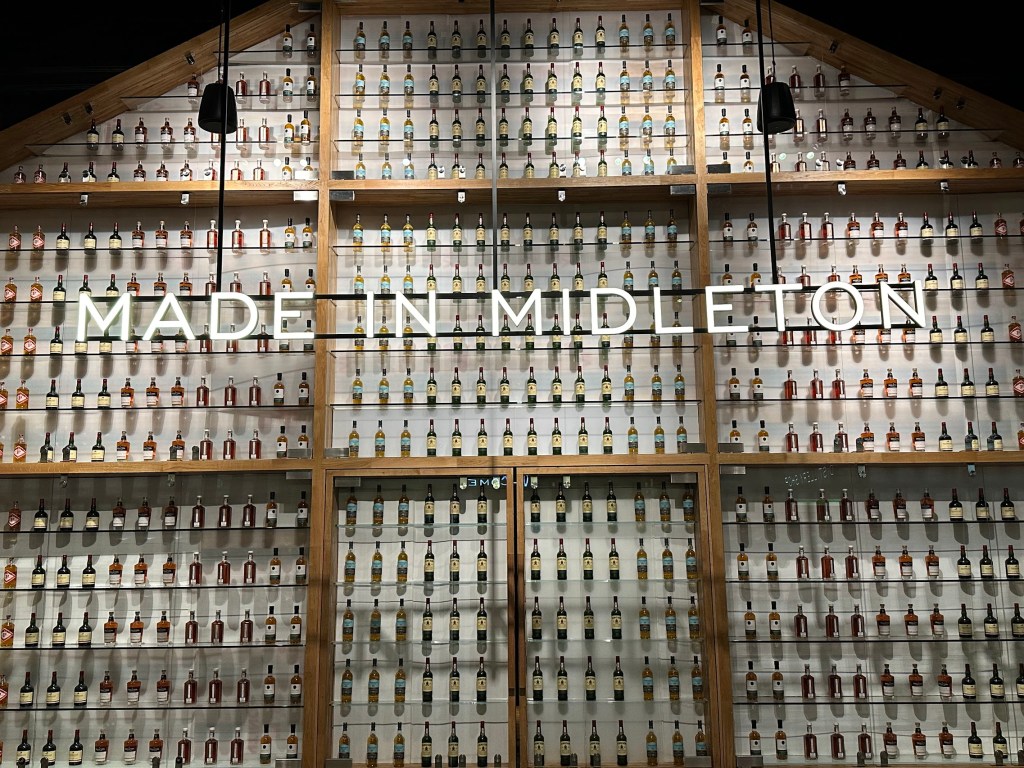
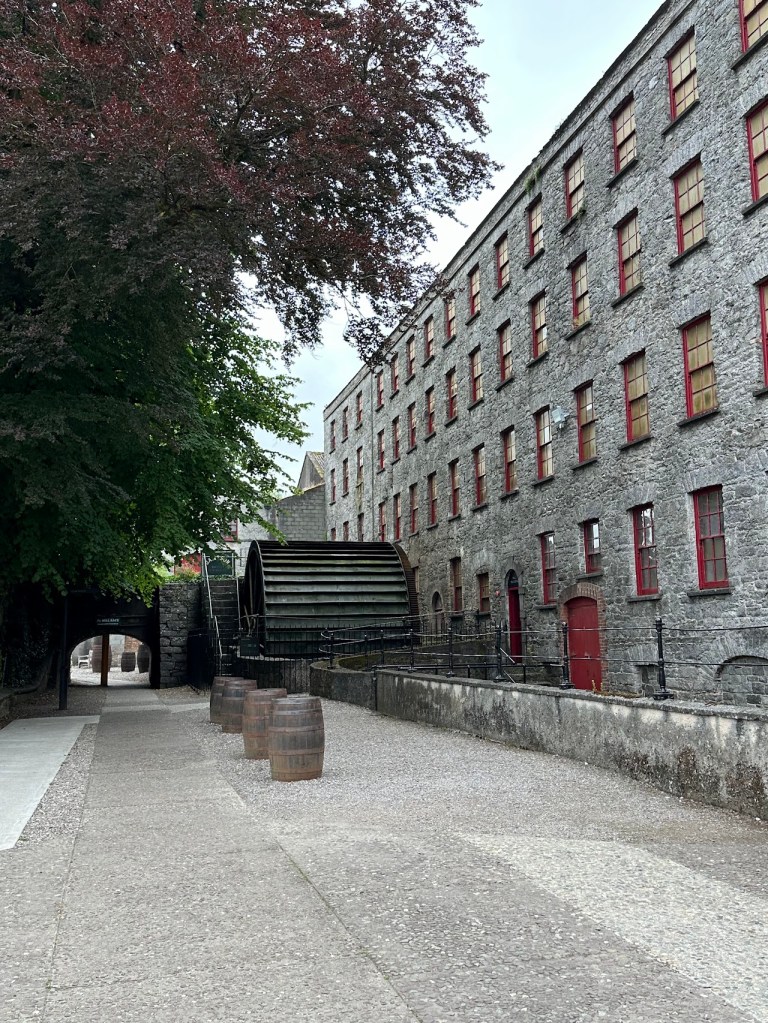
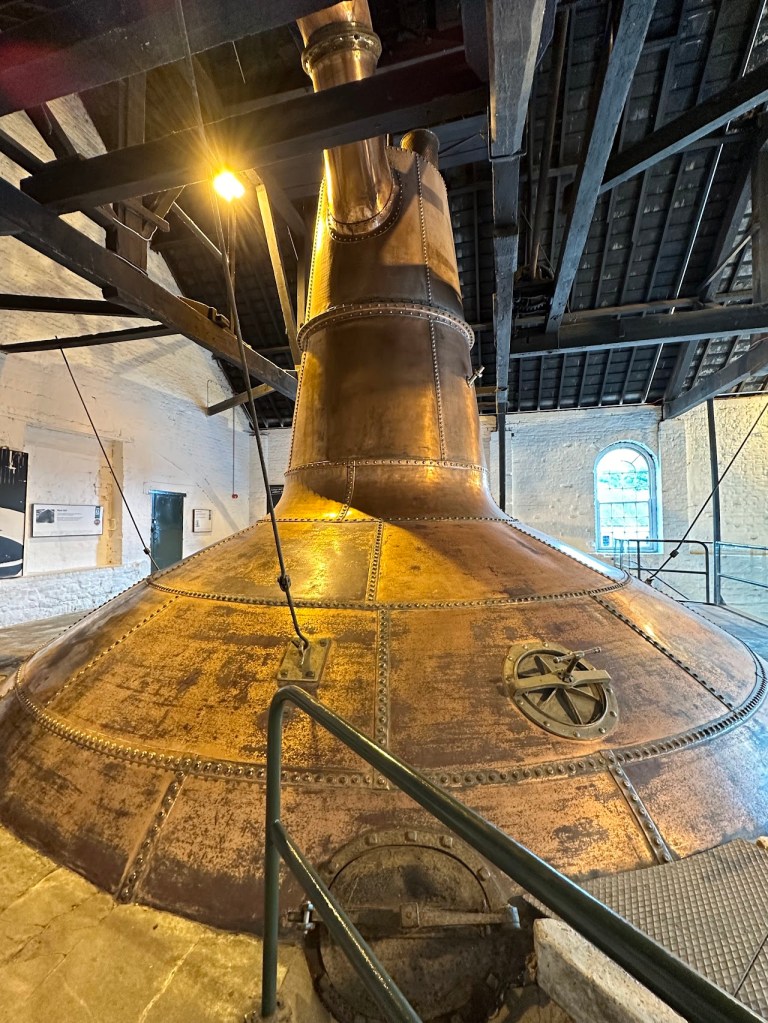
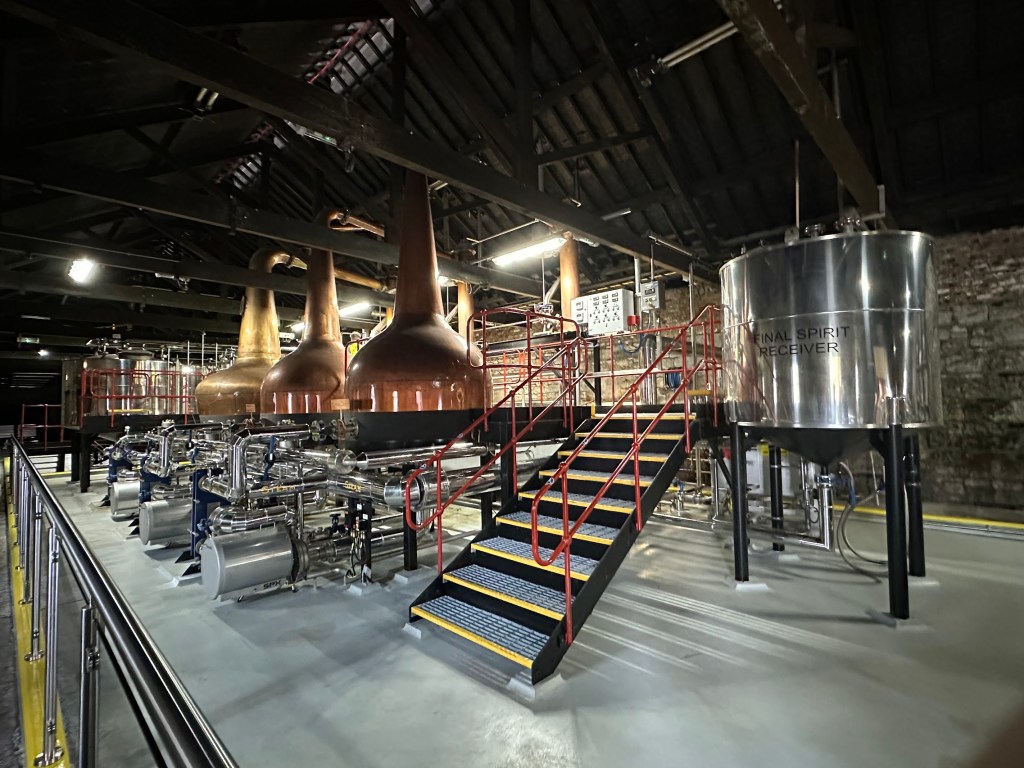
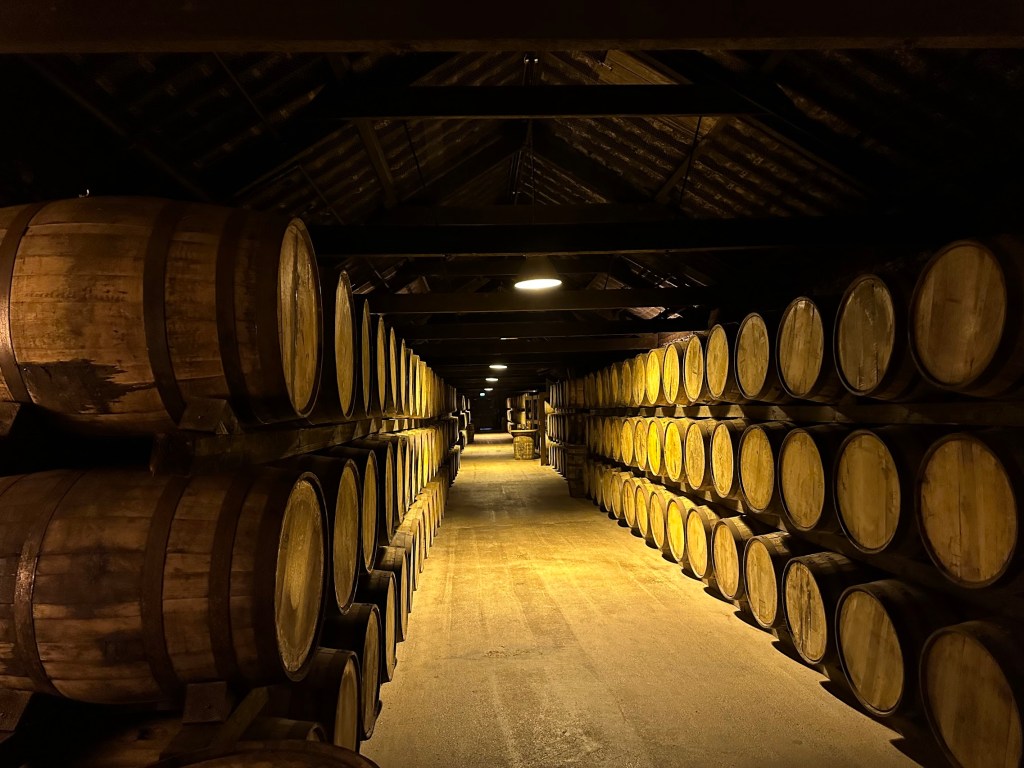
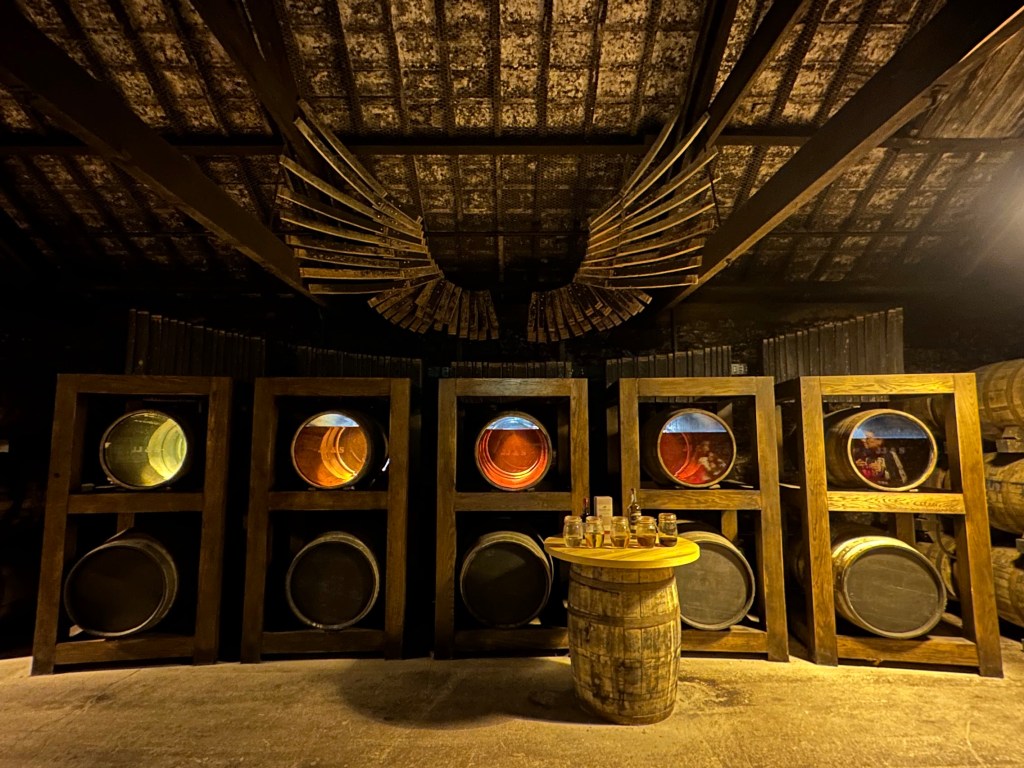
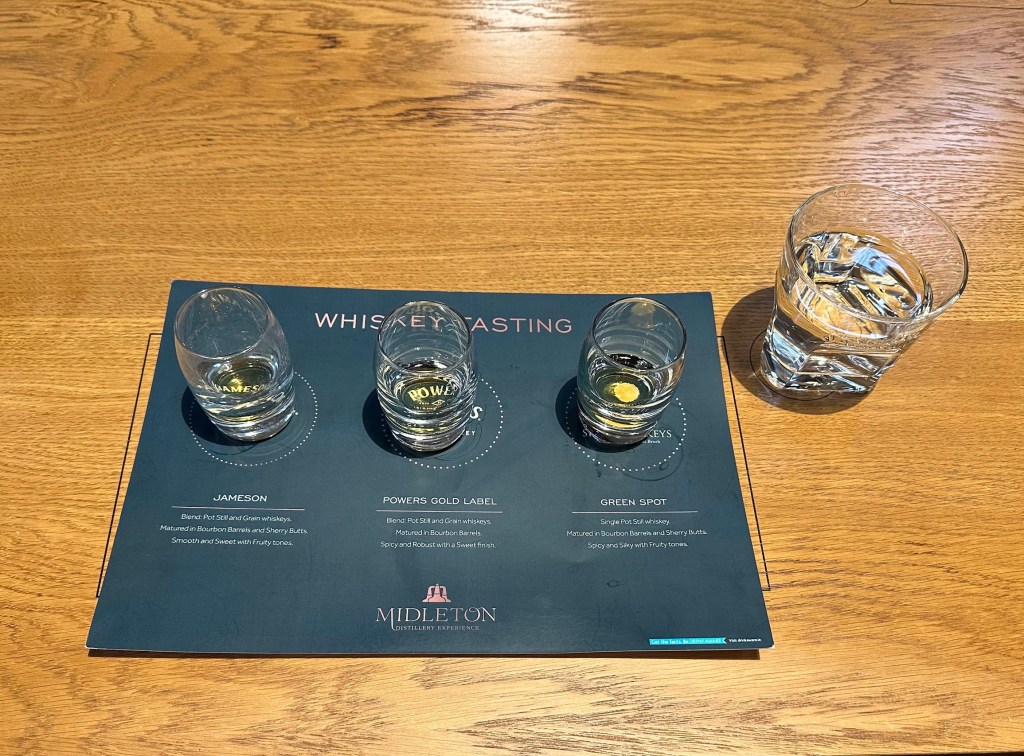
Midleton is a tiny town without much going on, aside from the distillery, so after we finished the tour, we walked the downtown in search of a restaurant that could meet our dietary needs (we failed – every single restaurant had an inescapable combination of eggs, dairy, and/or soy) and then immediately left back to Cork.
From Cork, we intended to land in Galway, with some stops along the way to see Blarney Castle and Limerick. We had intended to pull over and see additional ruins of various abbeys, but the mostly two-lane regional road we found ourselves on was a stressful enough drive that we scrapped that idea fairly quickly.
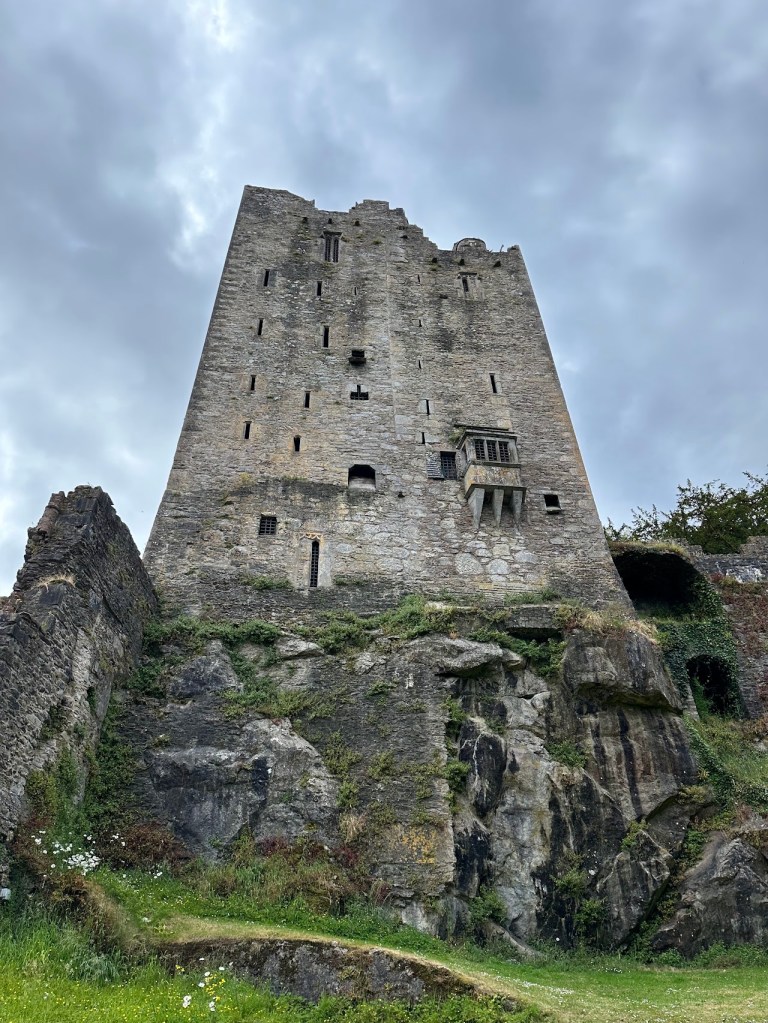
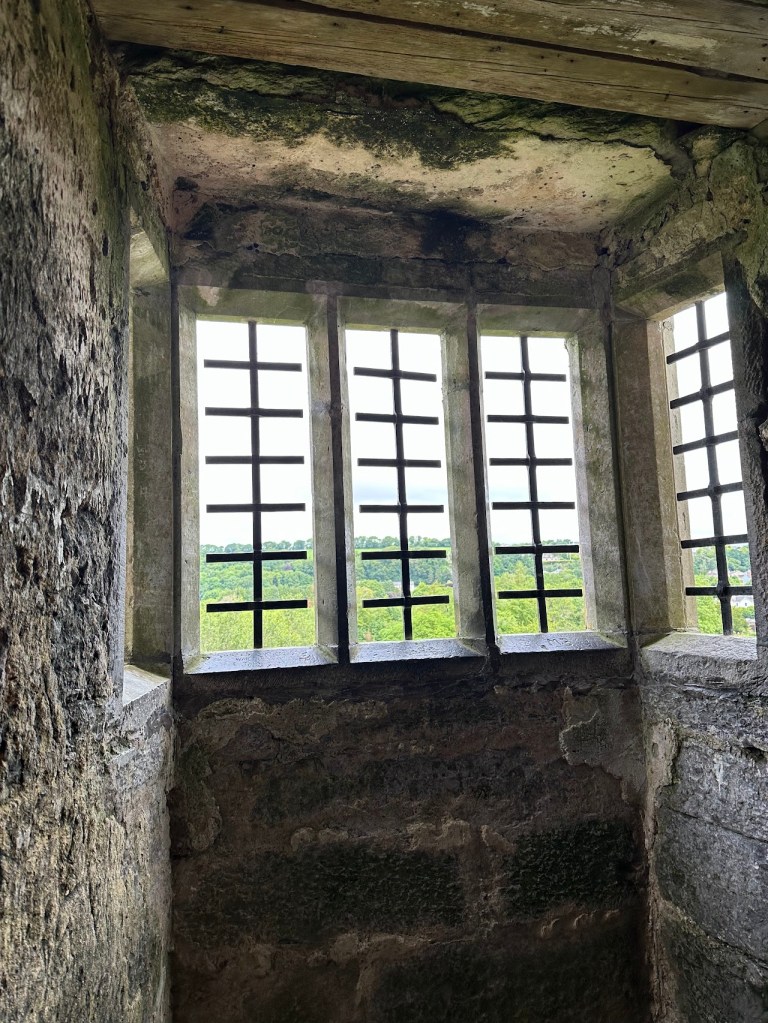
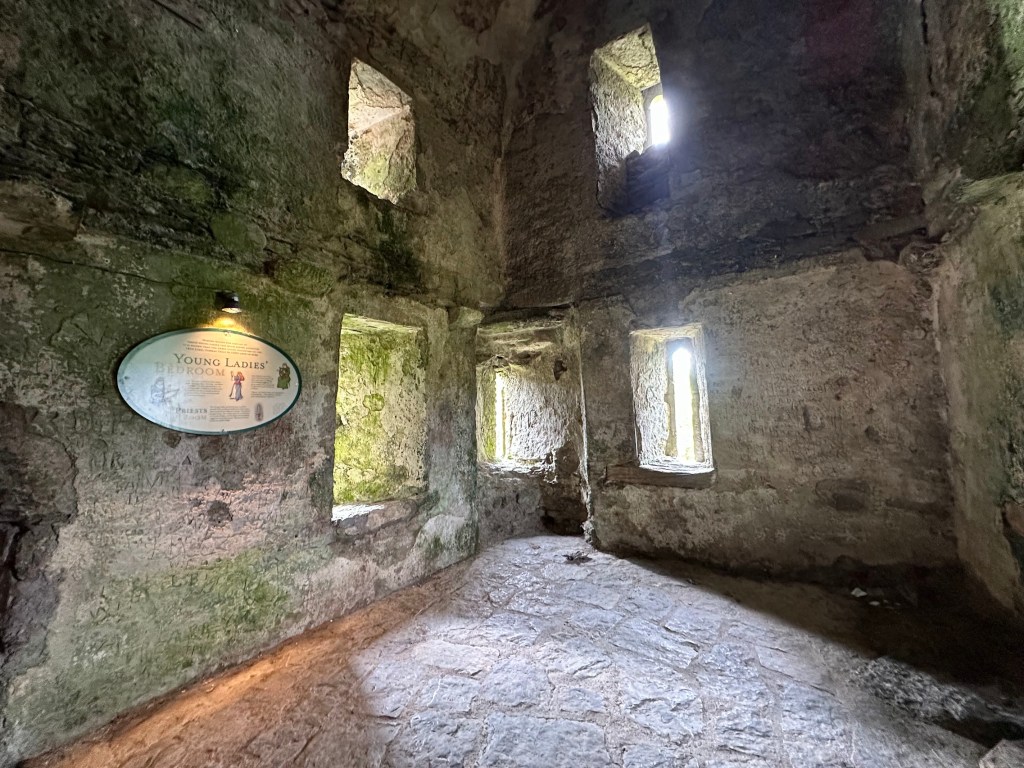
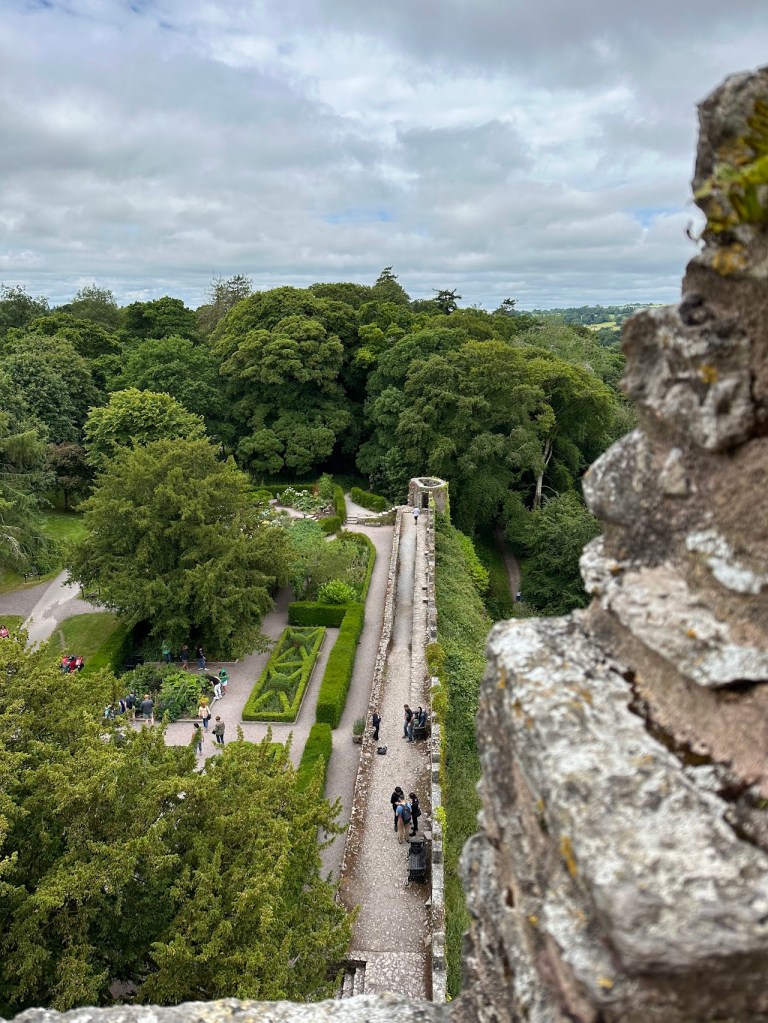
Blarney Castle was a bit of a spectacle. There was a half hour wait to get up to the top of the castle, and to kiss to stone if you wished, but they had various placards set up throughout the interior of the castle as you wound your way upstairs. I would not say that Blarney Castle convinced me of castle living – despite the size of the castle, the interior was quite tiny. I suppose that’s the difference between a small lord and those who ruled from Sforza Castle, for example. I declined to kiss the stone, especially after the man in front of us in line told a jolly story about how the last time he visited, his wife had a cold sore and their group made her kiss the stone last.
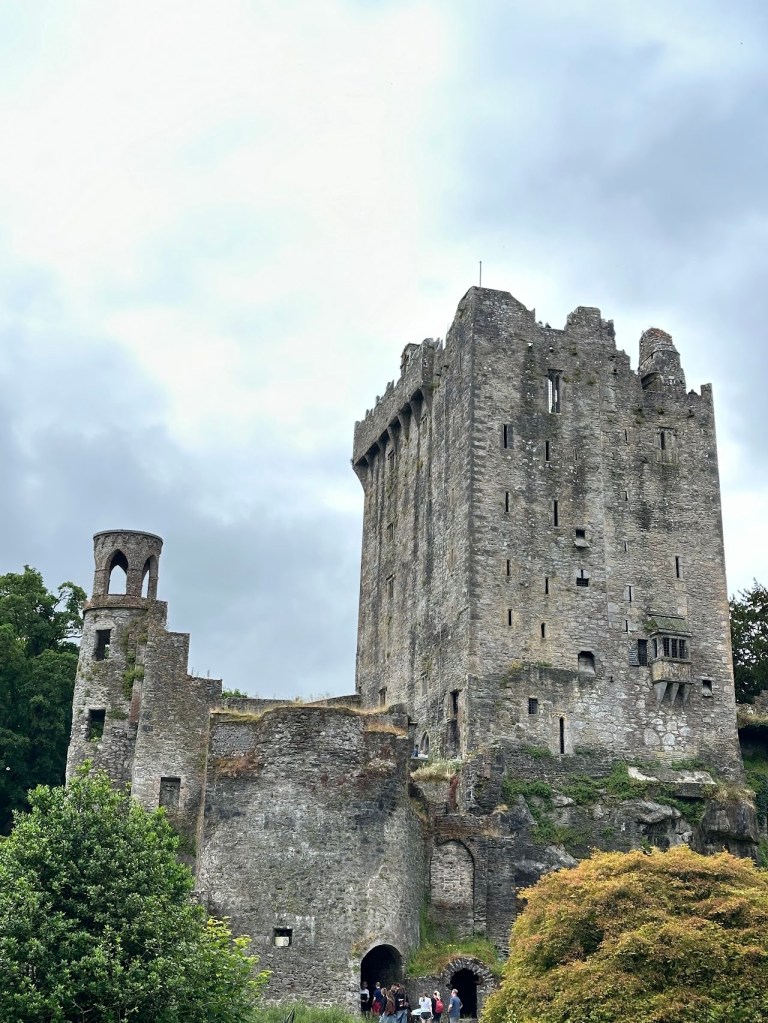
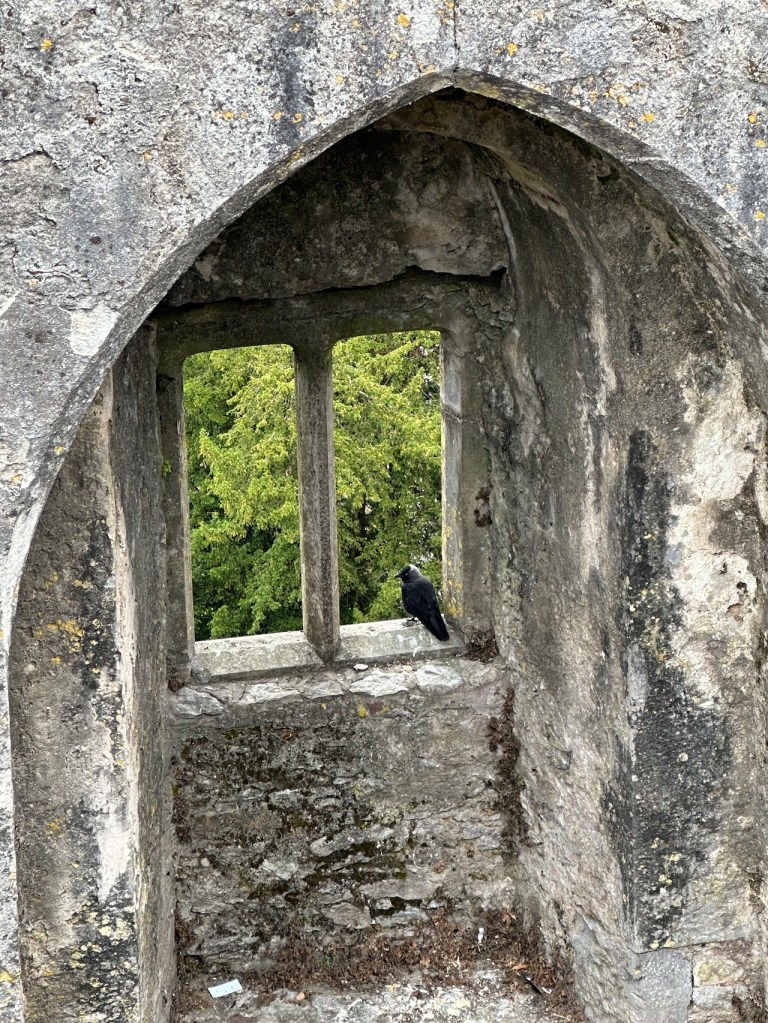
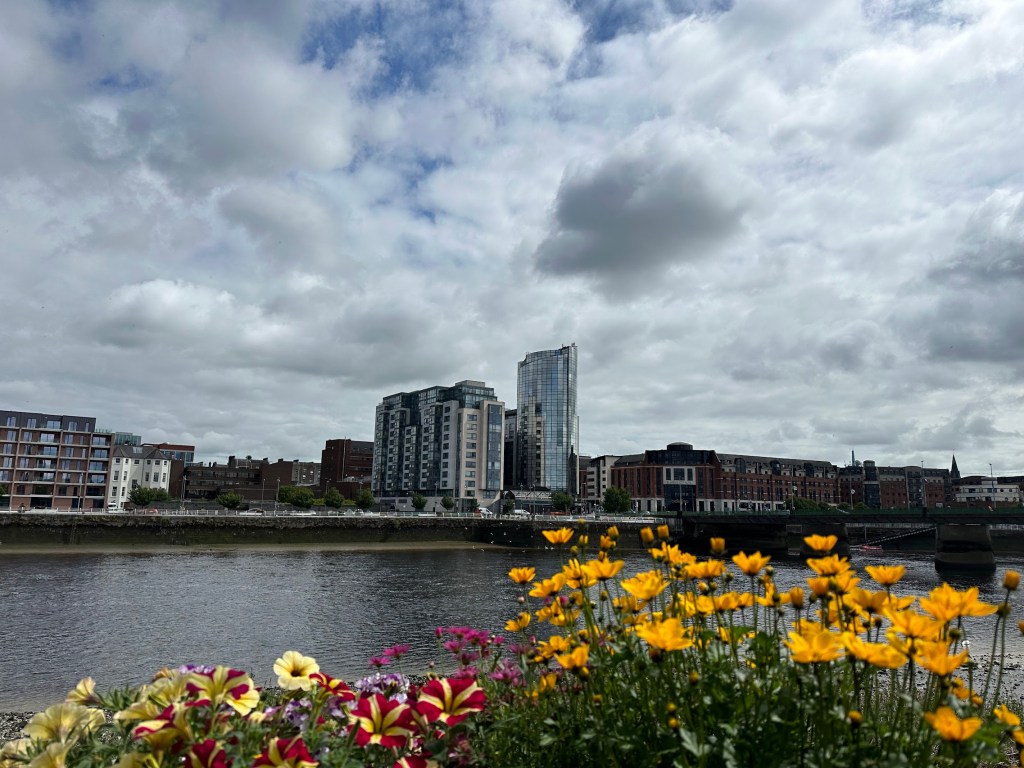
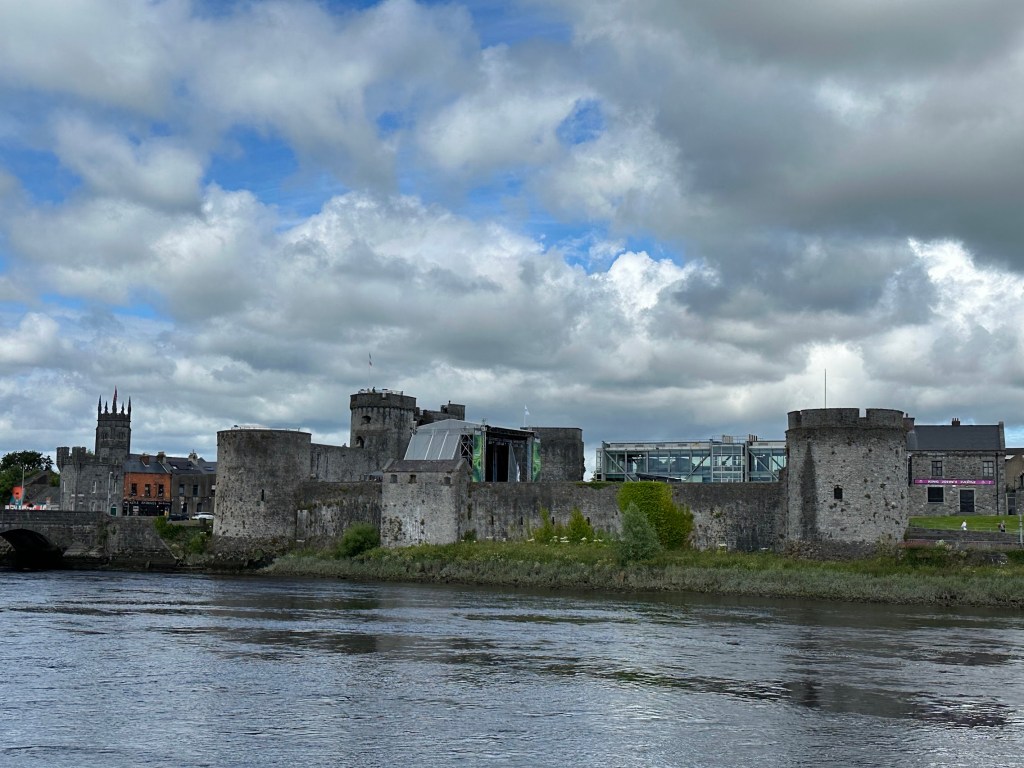
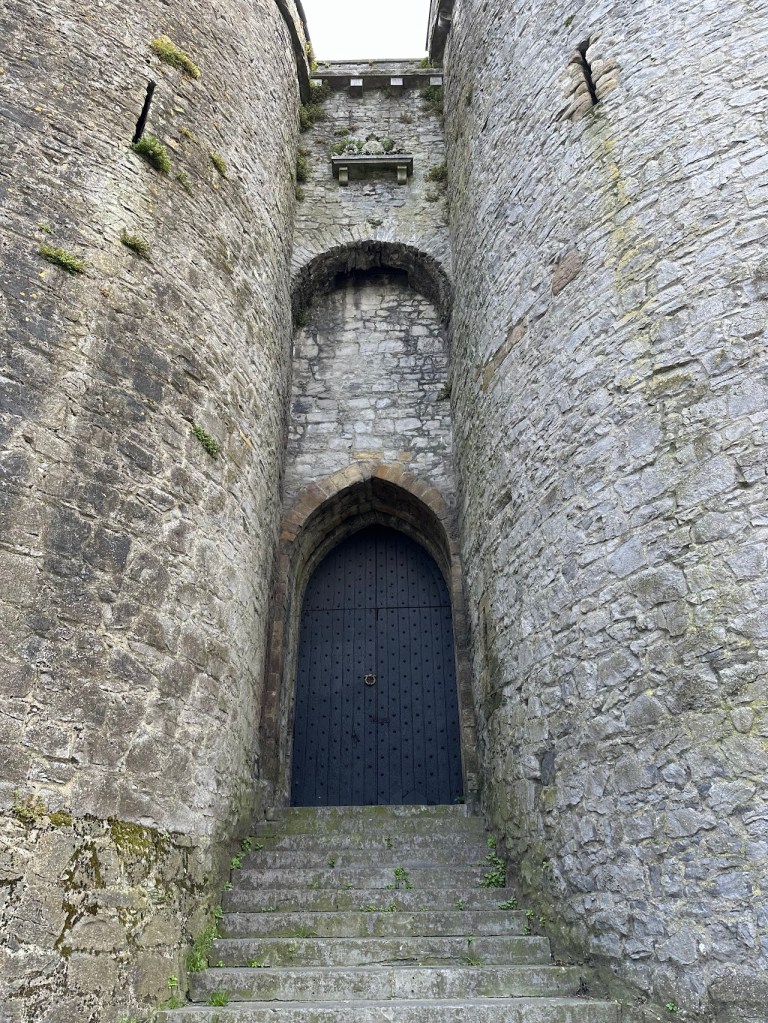
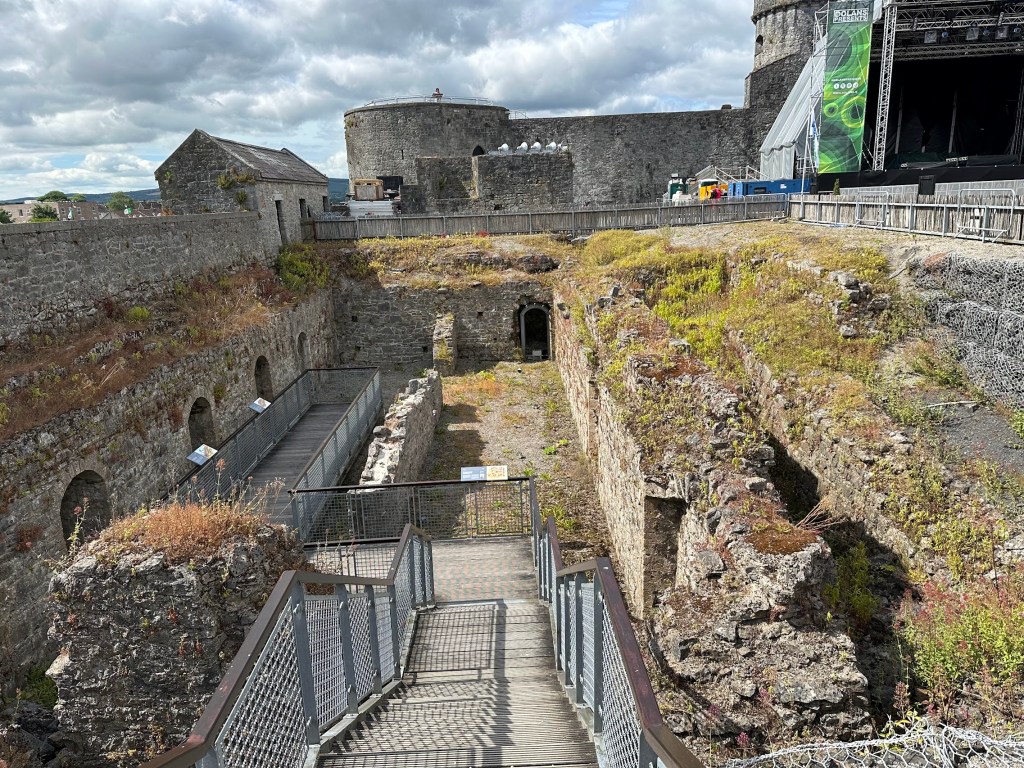
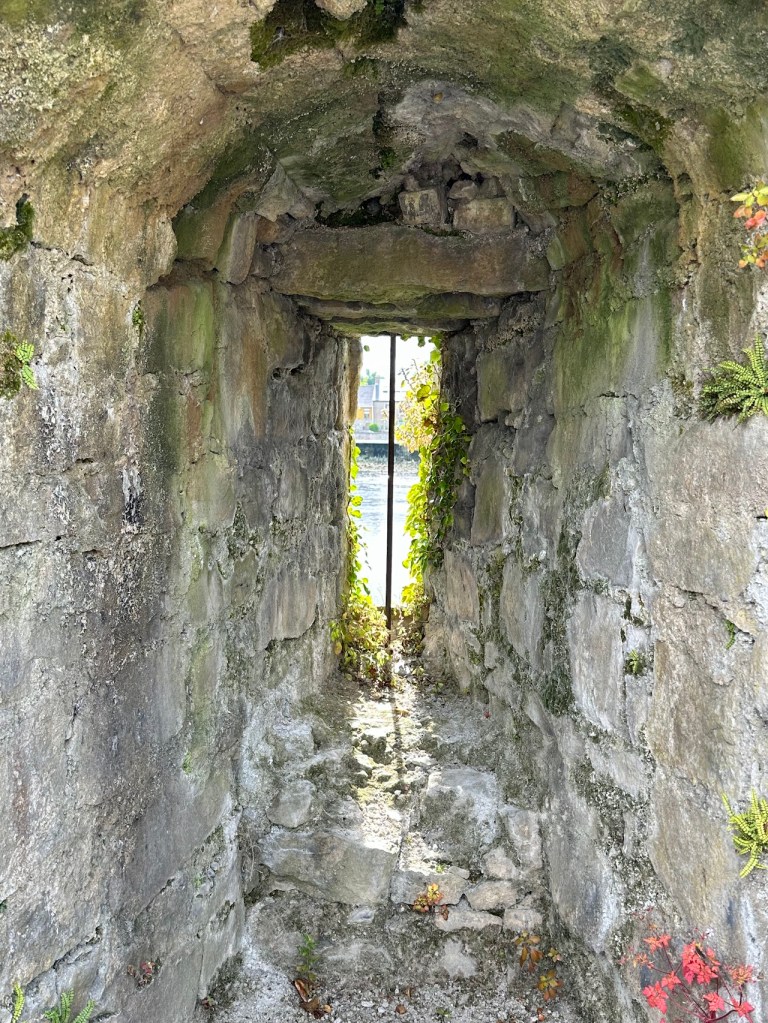
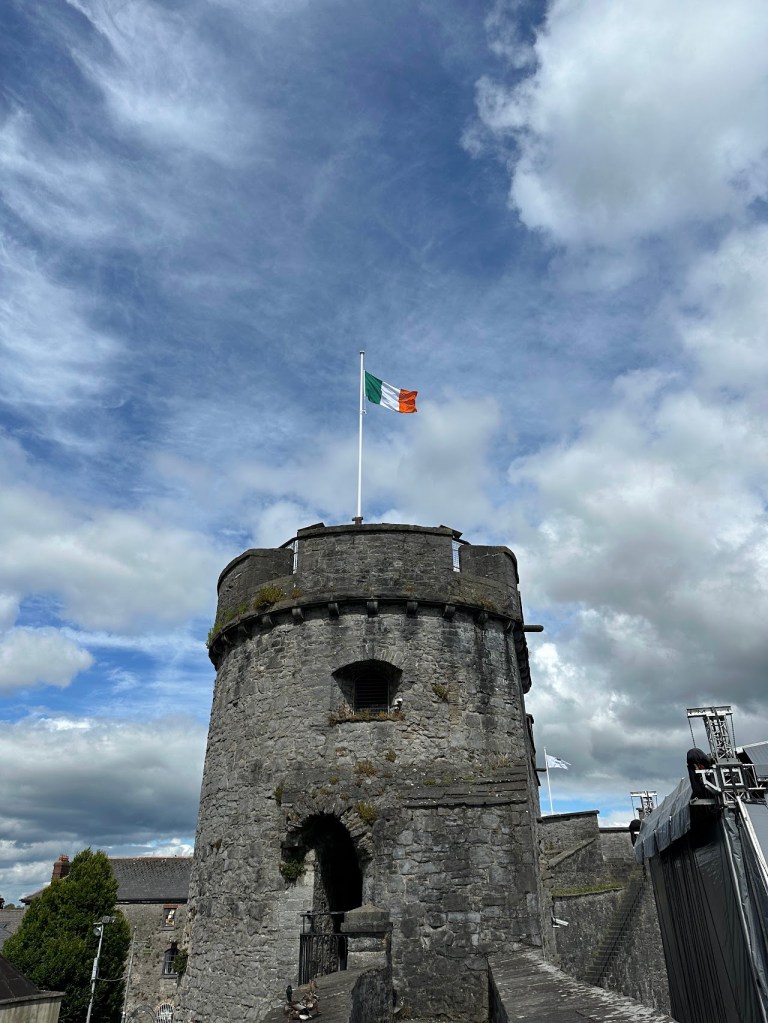
Limerick was about an hour and a half away from Blarney Castle, and was another stop that I didn’t have many thoughts about – the only reason it was on my mental map was because of its feature in Angela’s Ashes. It was quite welcoming and bustling, however, with a beautiful riverfront walkway on both sides, a nice walkable downtown area, and some fun to be had going through King John’s castle. The castle in particular impressed me, as it had lots for kids to do as they went through the historical explanations but the explanations themselves were dense enough to entertain adults.
Next up was Galway. Now, neither of us really wanted to go to Galway. There didn’t seem to be a ton to do in Galway, but it was heavily recommended online, mostly by (we noticed) older Americans. This made us uneasy that it was a tourist destination for people who had a predisposed mental image of Ireland and wanted something “easy” that fit their expectations. However, it was the central point between the Cliffs of Moher and Kylemore Abbey, both of which I wanted to see, so it made sense to stop here. While we were driving there, however, we tallied up the next day’s required driving to see both locations and discovered it would be over 6 hours of driving on small roads. Between that miss in planning and the fact that the next day was supposed to be rainy, we decided to to skip the Cliffs of Moher and only see Kylemore Abbey the next day.
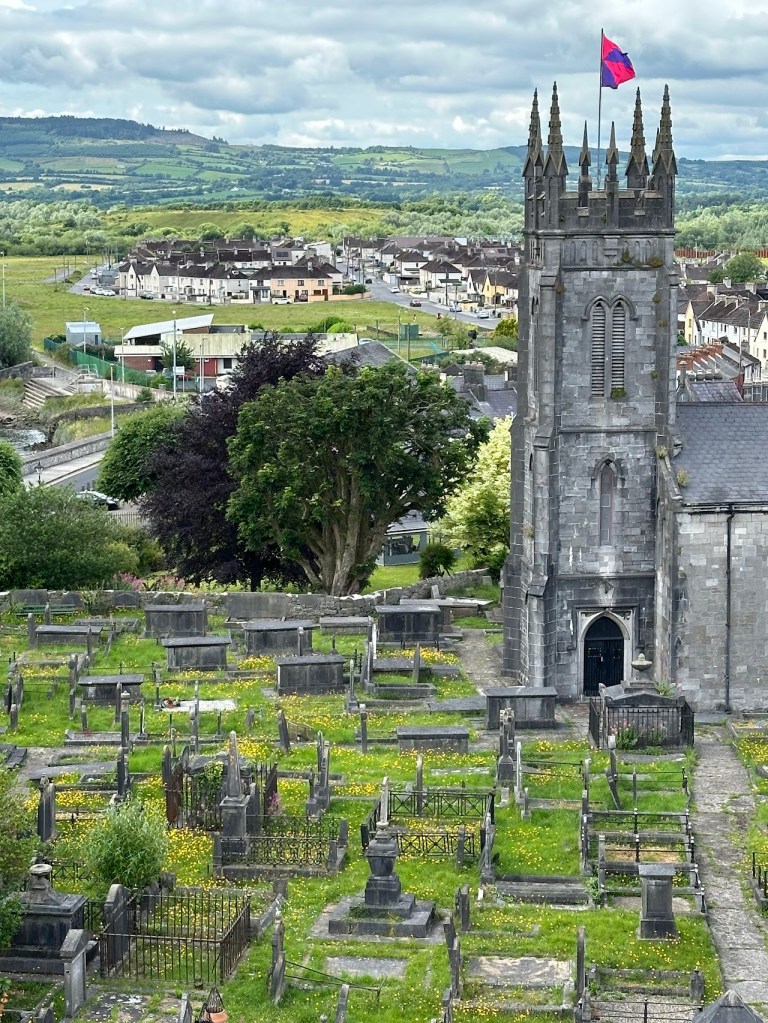
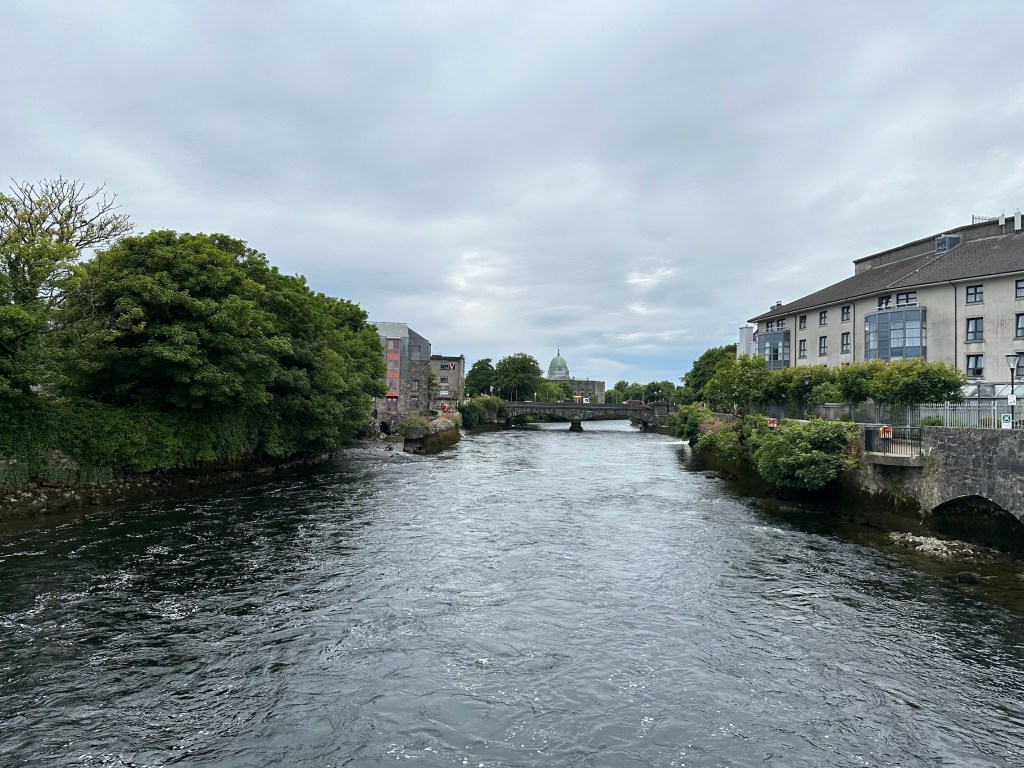
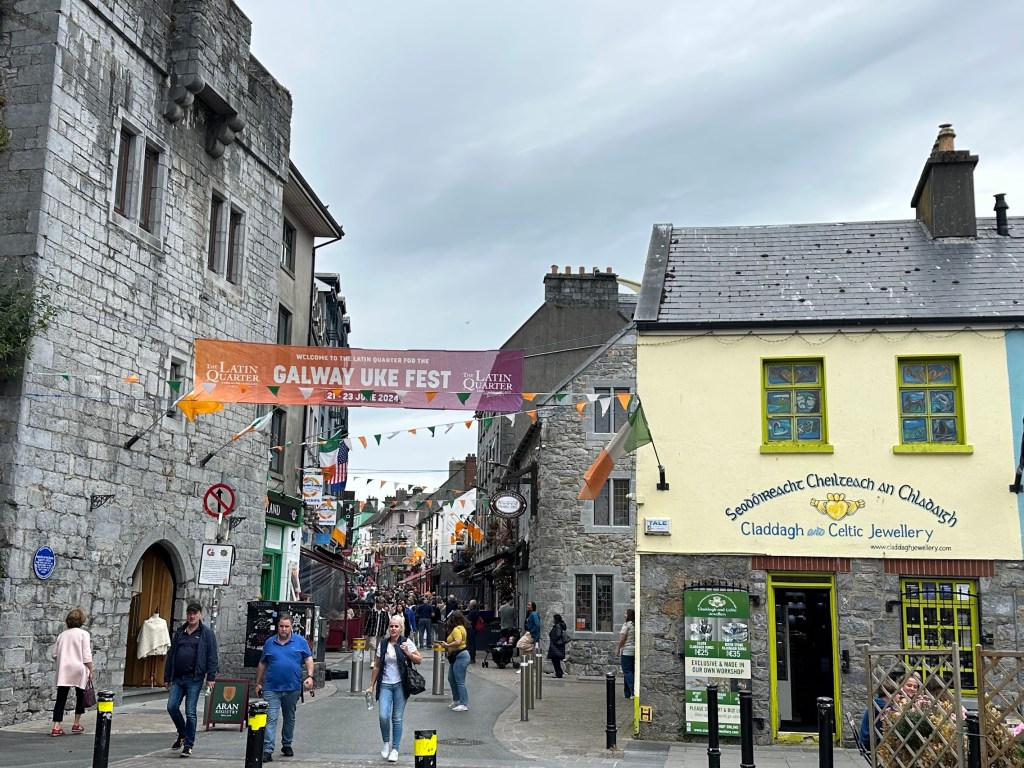
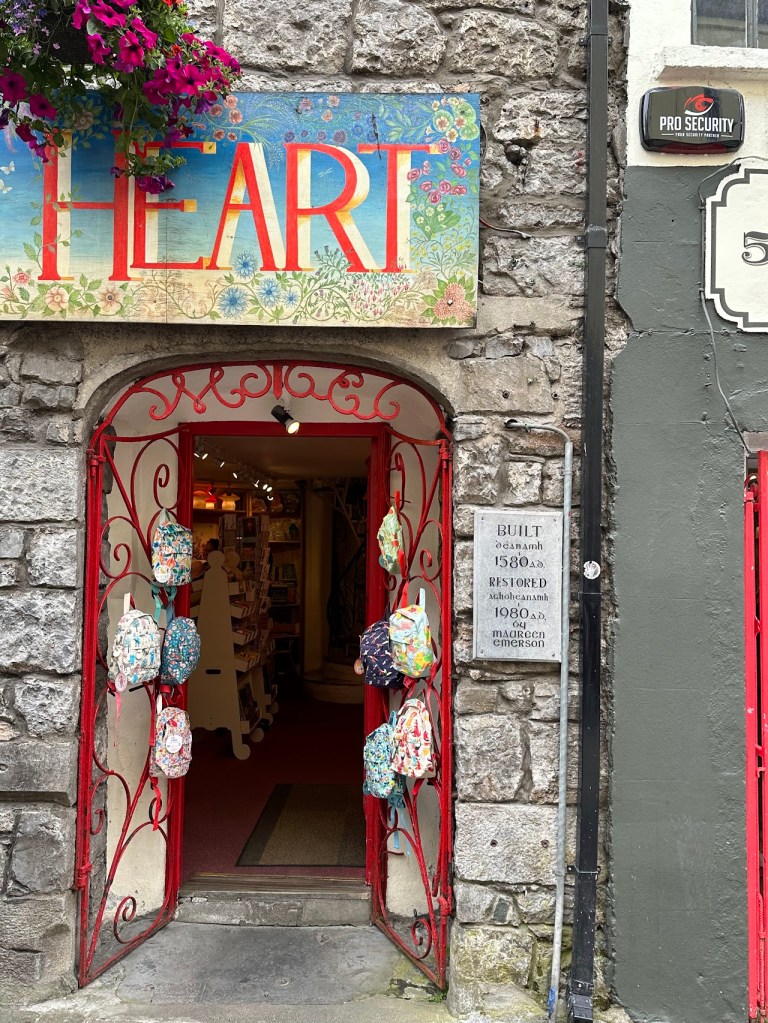
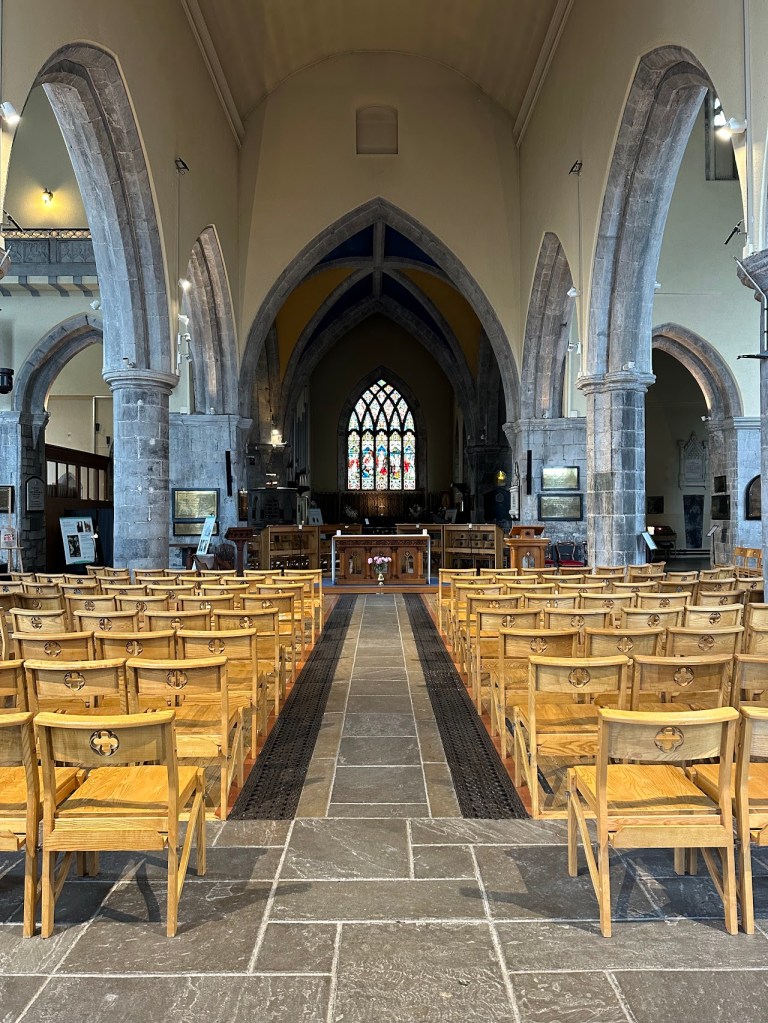
Unfortunately, due to the heat and the lack of either a fan or AC in our Airbnb (which did have AC listed as an amenity when I booked it), I got approximately three hours of sleep our first night in Galway. My husband awoke to a screenshot of a hotel room with AC that I found while laying awake at 2 am, and jumped into action trying to salvage the day for me – lots of caffeine, dropping off our laundry at a launderer (so affordable!), picking up food, and making a plan that didn’t involve me, exhausted, trying to navigate us by car. Mostly, that involved using the half day after our clothes were done to walk around Galway. Spoiler: our assumptions about it were correct. The main tourist drag was like a repeating cartoon background of pub food – coffee shop – tourist shop – random shop. We tried to wander away from the tourist area and found that most of the roads in the area specifically curved back to it, so we kept finding ourselves either there or the square immediately adjacent. We did find an old cathedral that allowed us to wander around inside and read about the history of the area and the cathedral itself, so it wasn’t a total loss, but I was glad to get on the train to Belfast the next day.
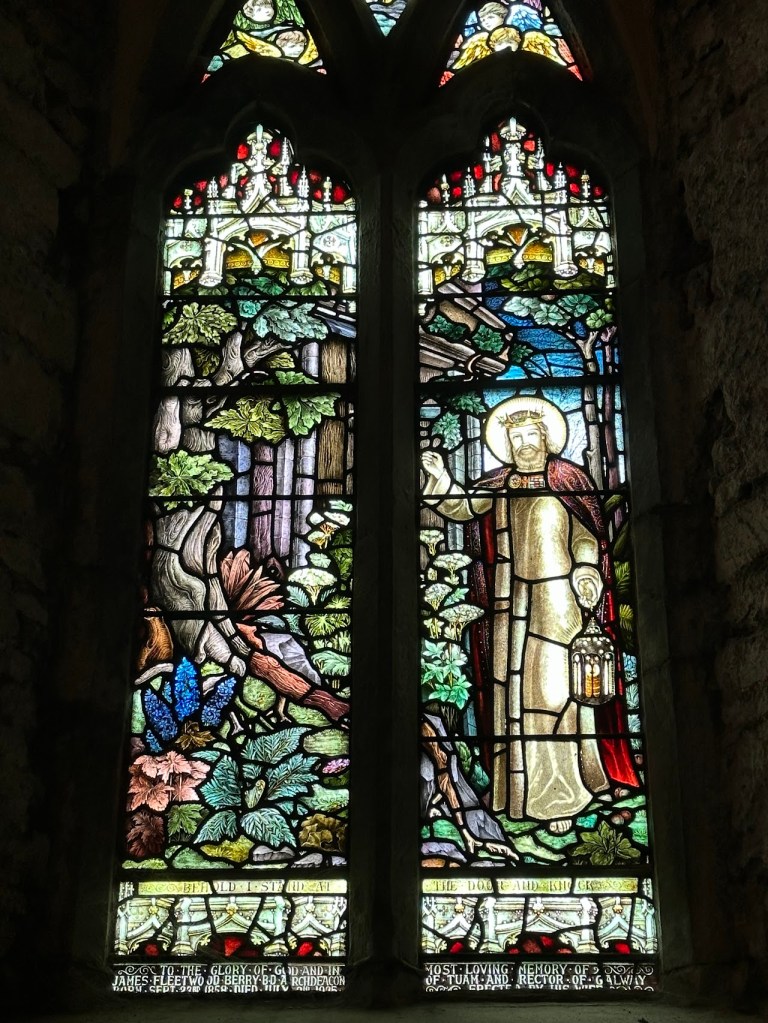
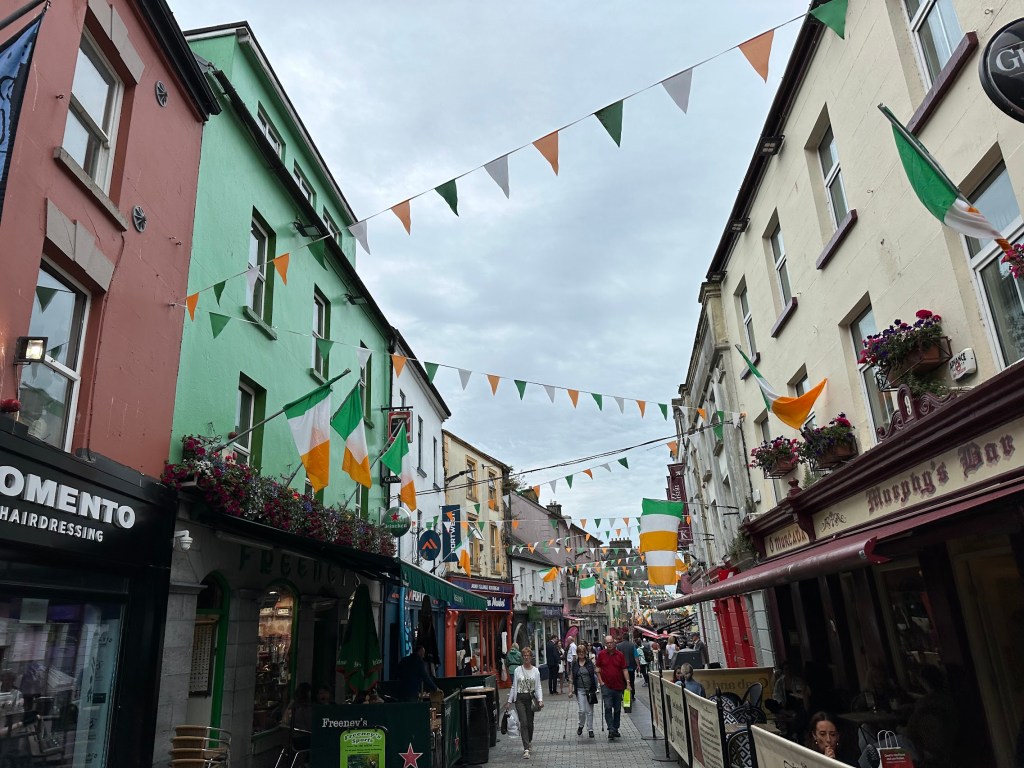
In a welcome contrast to Galway, my least favorite stop of the trip, Belfast was my absolute favorite. I love a city where I can arrive, wander around, and just find cool stuff to do, and Belfast delivered that … once we’d managed to arrive successfully.
When we left Galway by train, we had cell service. I had paid for international service through our carrier Verizon, and it was mostly very solid the whole way through. While on the train, I noticed that I didn’t have service, but since I was reading a book most of the time, I didn’t think too much of it. We pulled into the main station in Belfast and I immediately noticed that I still didn’t have service. I also noticed that it was raining. I also noticed that we were surrounded by women ages 20-60, most of whom were wearing leopard print, felt cowboy hats, and cowboy boots. Many of them were drunk. There were so many of them and they were all streaming in one direction.
We tried waiting at the cab area we were directed to, since I couldn’t use Uber without the internet, but after 10 minutes and no cabs, we decided to try our luck on our own. Rather than fight the stream of Americanized Irish women, we followed the stream, only to discover we were being fed to the Shania Twain concert happening that evening. Finally, an explanation for the most surreal aspect of our arrival!
We fought our way back upstream after realizing we had gone in the opposite direction of our Airbnb. We tried connecting to Starbucks WiFi for hailing Uber, but there was no internet connection. We tried asking the youths working at Starbucks, but none of them knew how to give directions. We finally figured out that the local train had a stop at the City Hospital, which was next to our Airbnb, so we got on the train, used the train WiFi to take a screenshot of the directions to the Airbnb from the City Hospital stop, and managed to get ourselves inside the Airbnb at last. Phew.
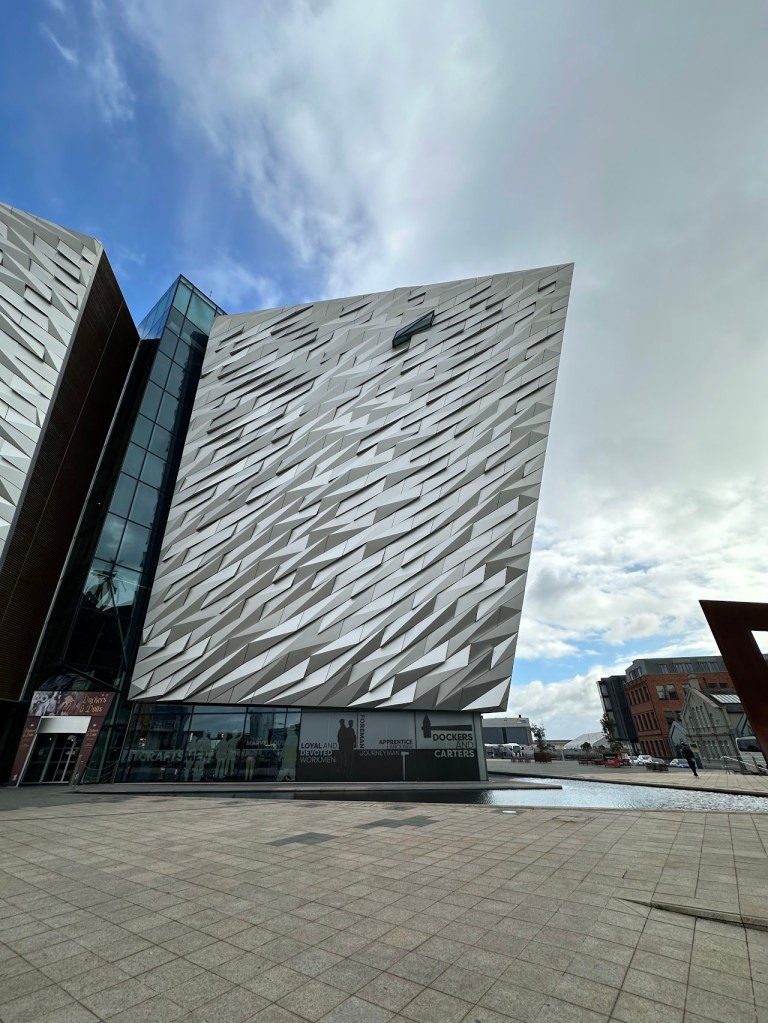
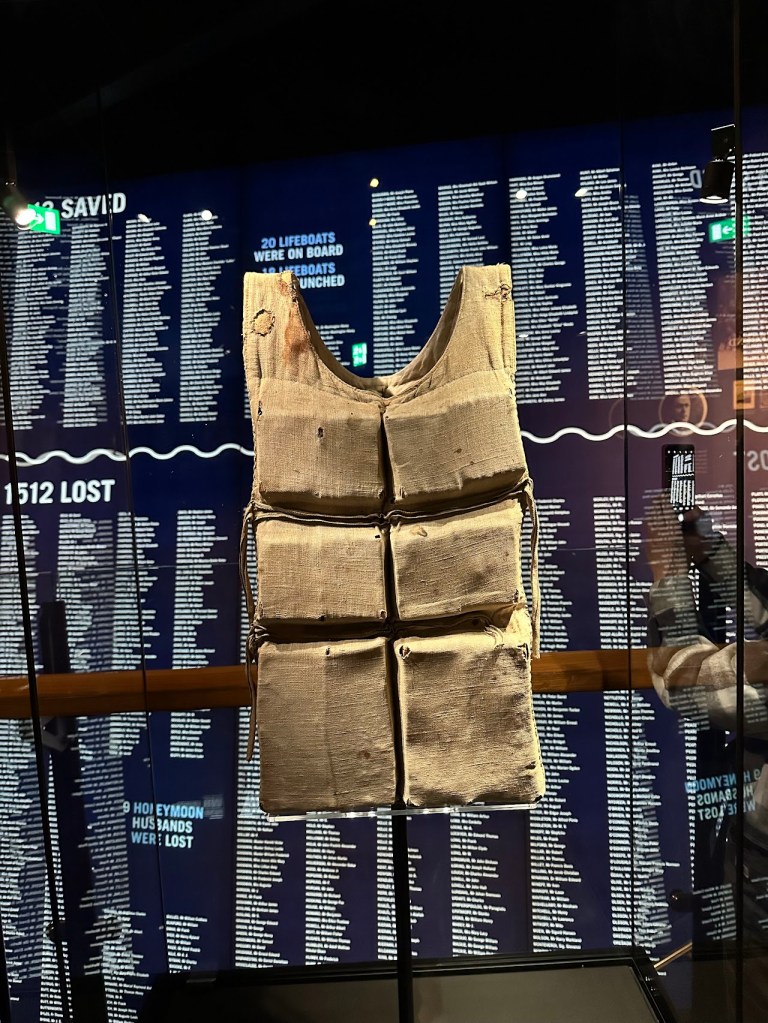
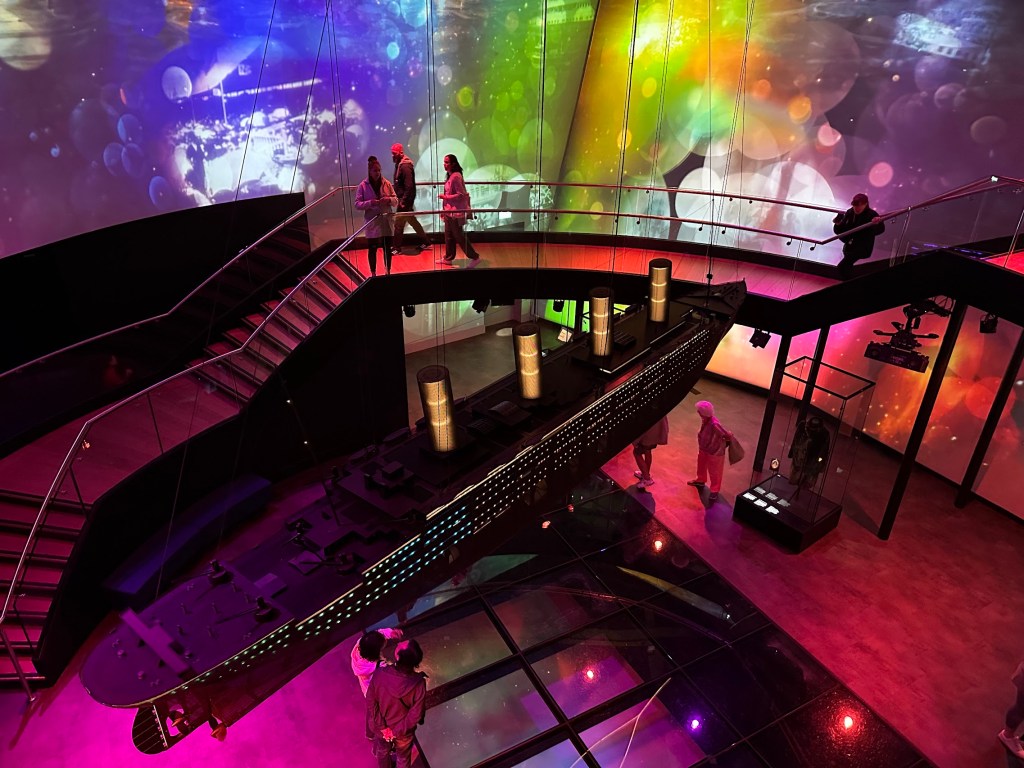
The most obvious activity to do in Belfast is the Titanic museum, which features prominently close to downtown. The museum was multiple levels, had tons of information about the history of Belfast as an up-and-coming industrial powerhouse, the building of the Titanic, replicas of the different types of accommodations, lots of artifacts, and even a small (gentle) roller coaster.
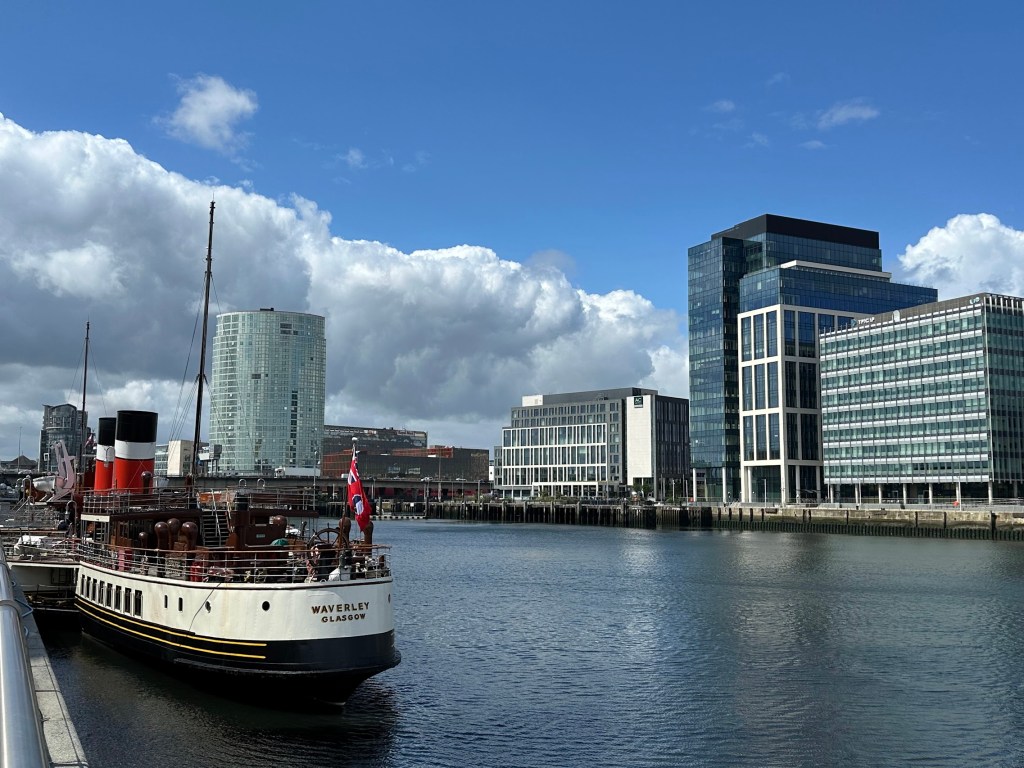
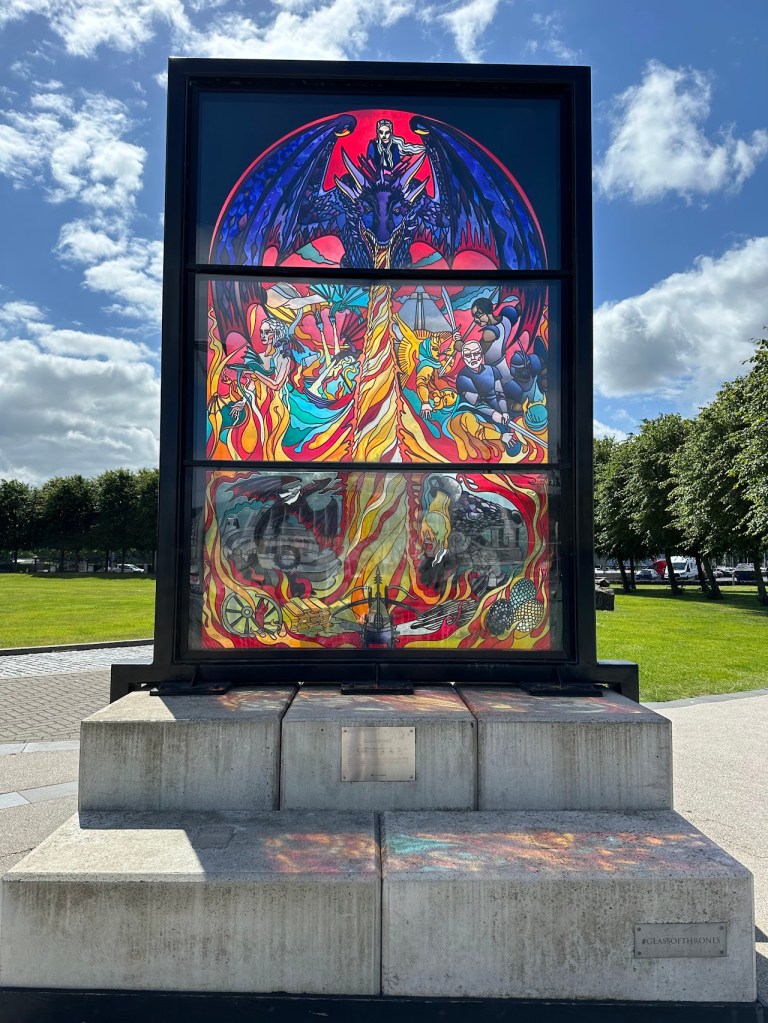
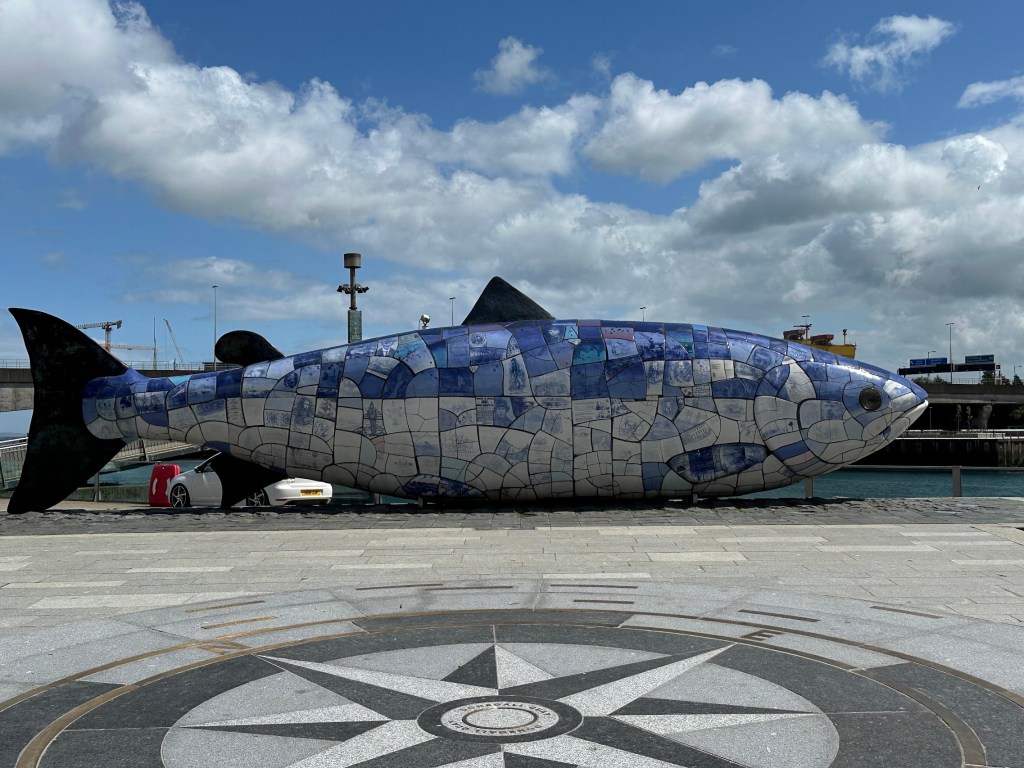
After that, we wandered around, found a market that was closing, found an excellent Italian-inspired restaurant, went into the multi-story mall with a glass dome viewing area, and wandered the Cathedral District for some quality people watching. The street art in Belfast was beautiful, and their city hall was not only impressive, but also specifically designed for people to wander in off the street and learn about the history of Belfast from founding to present.
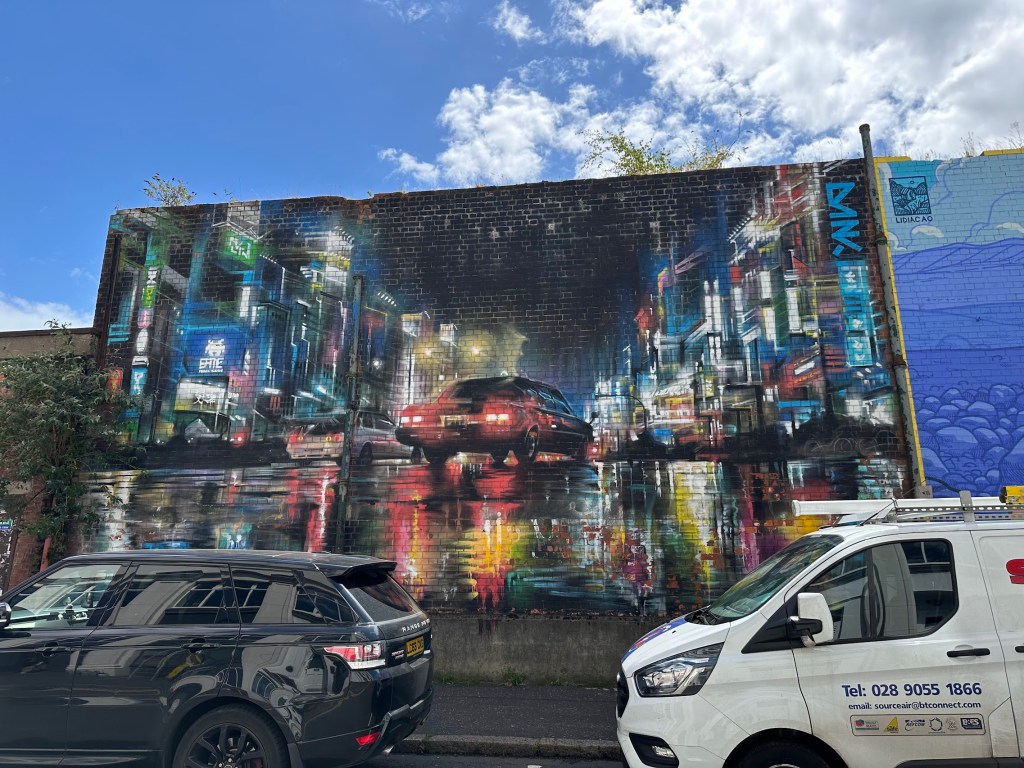
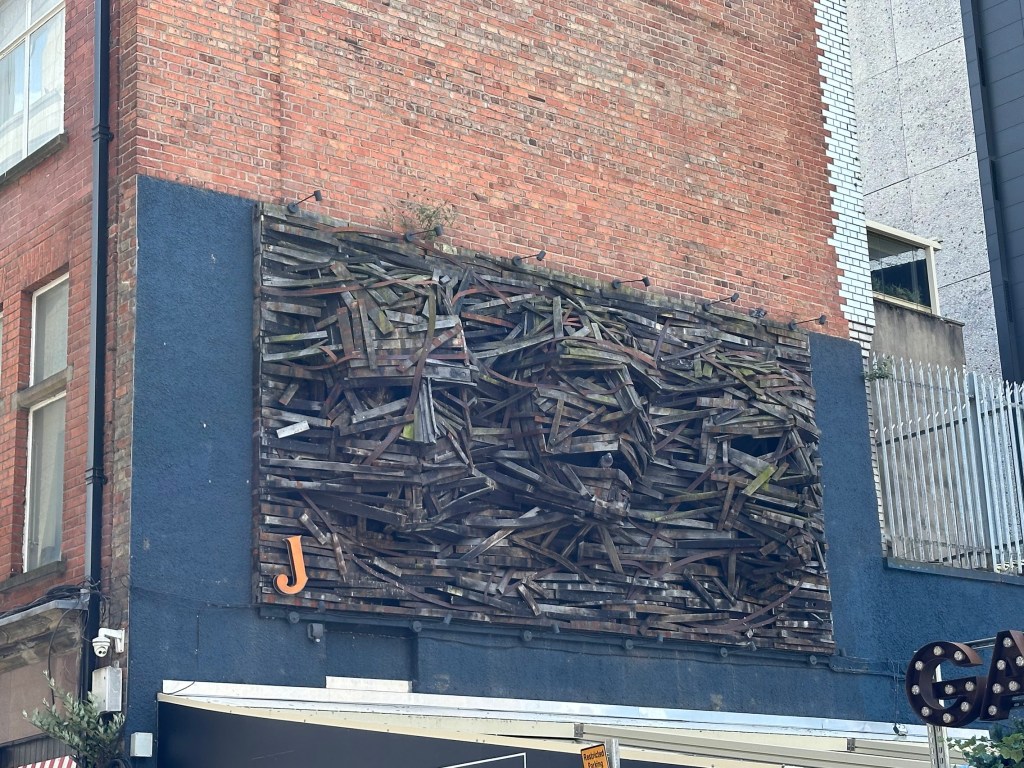
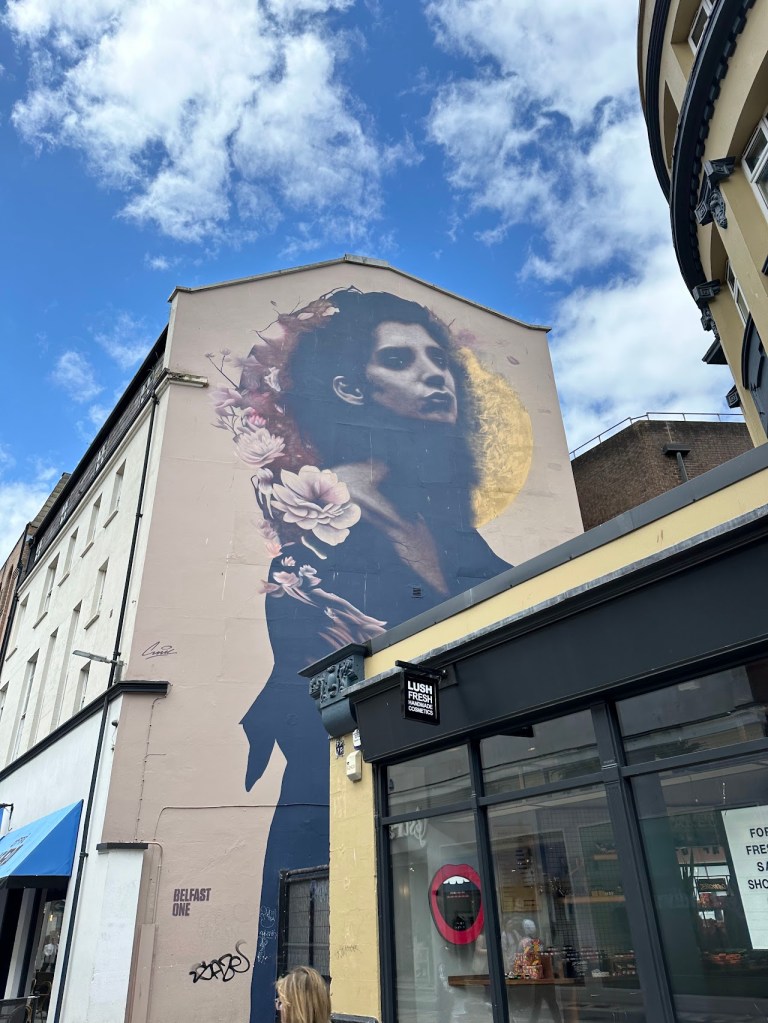
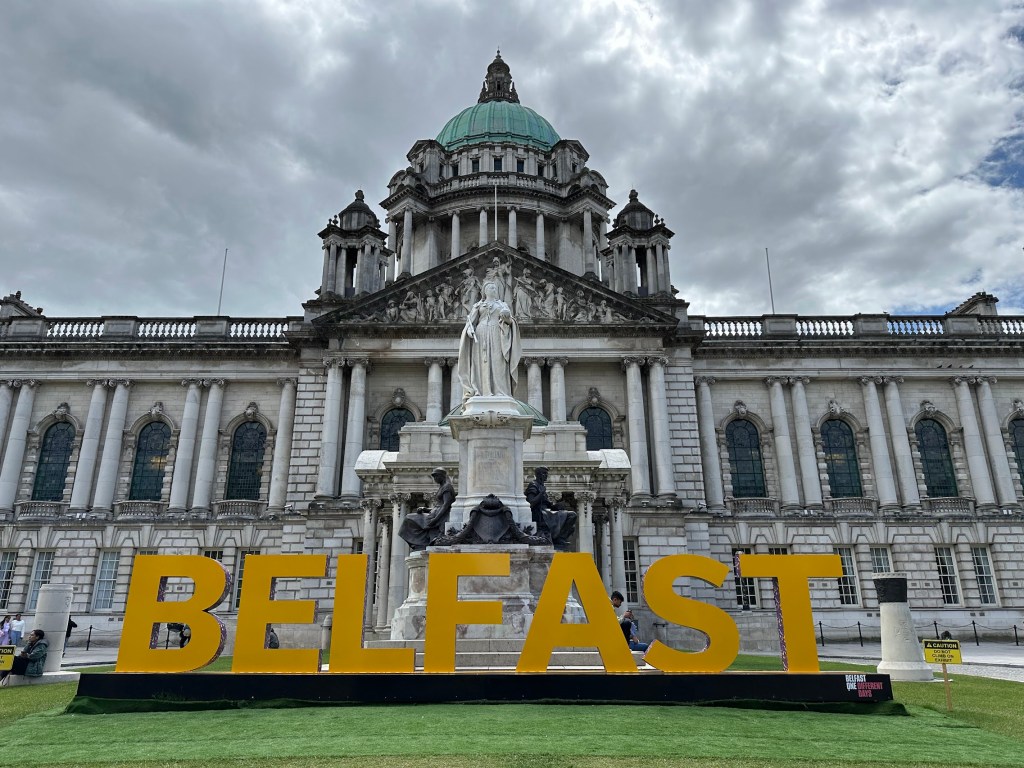
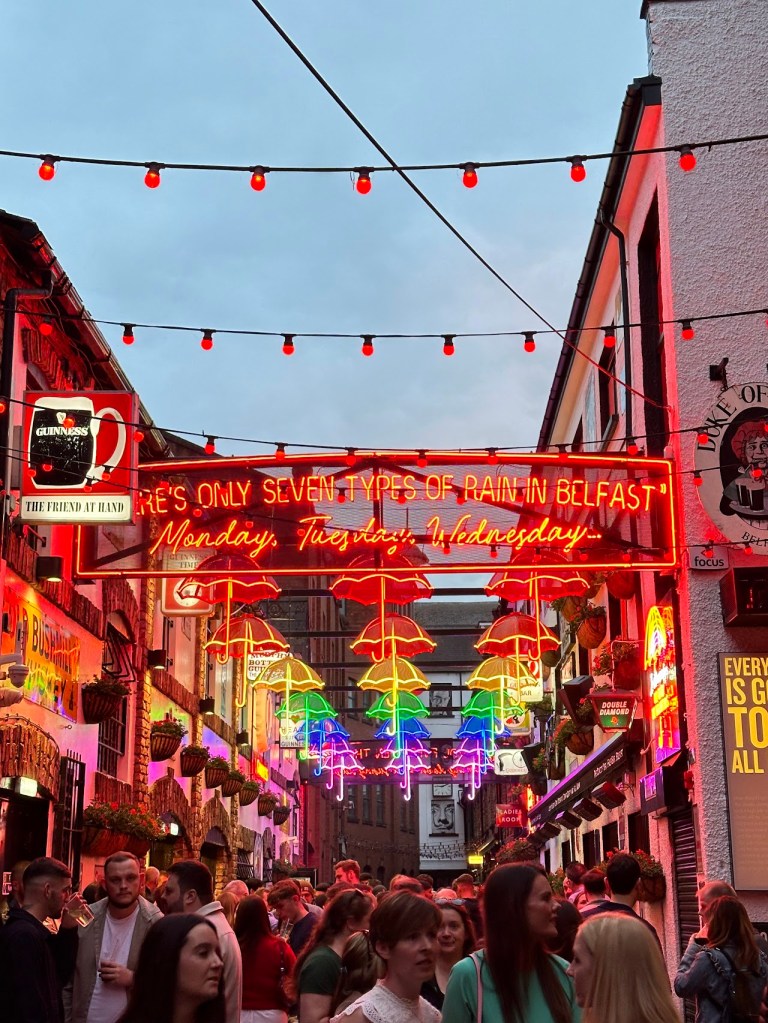
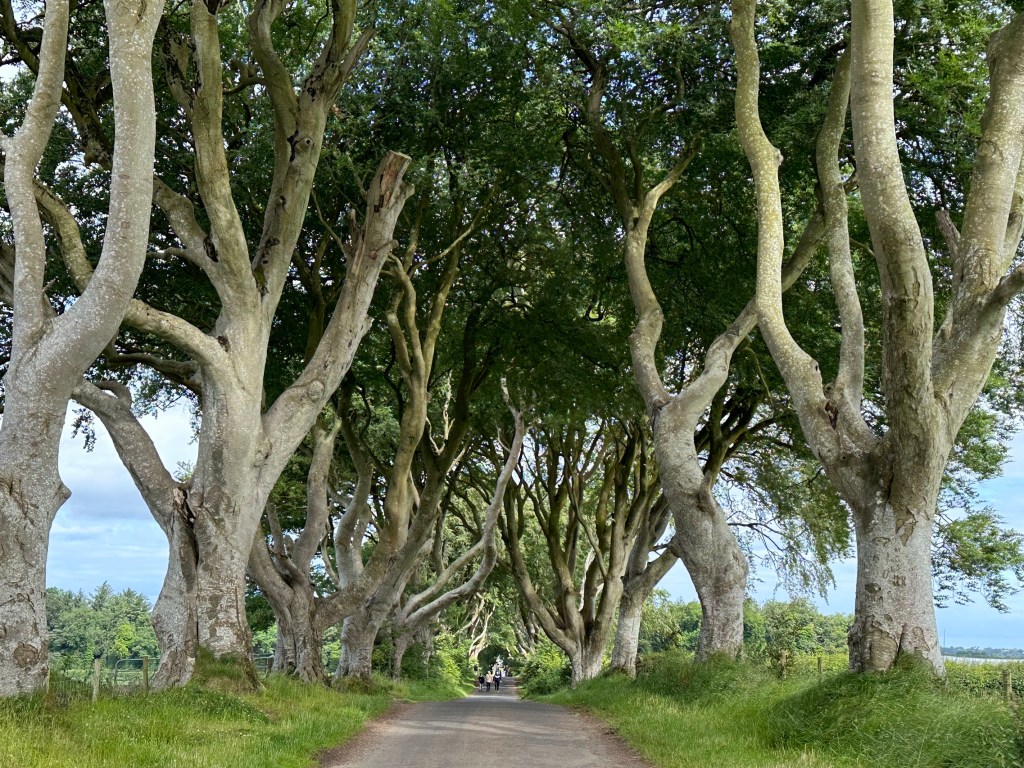
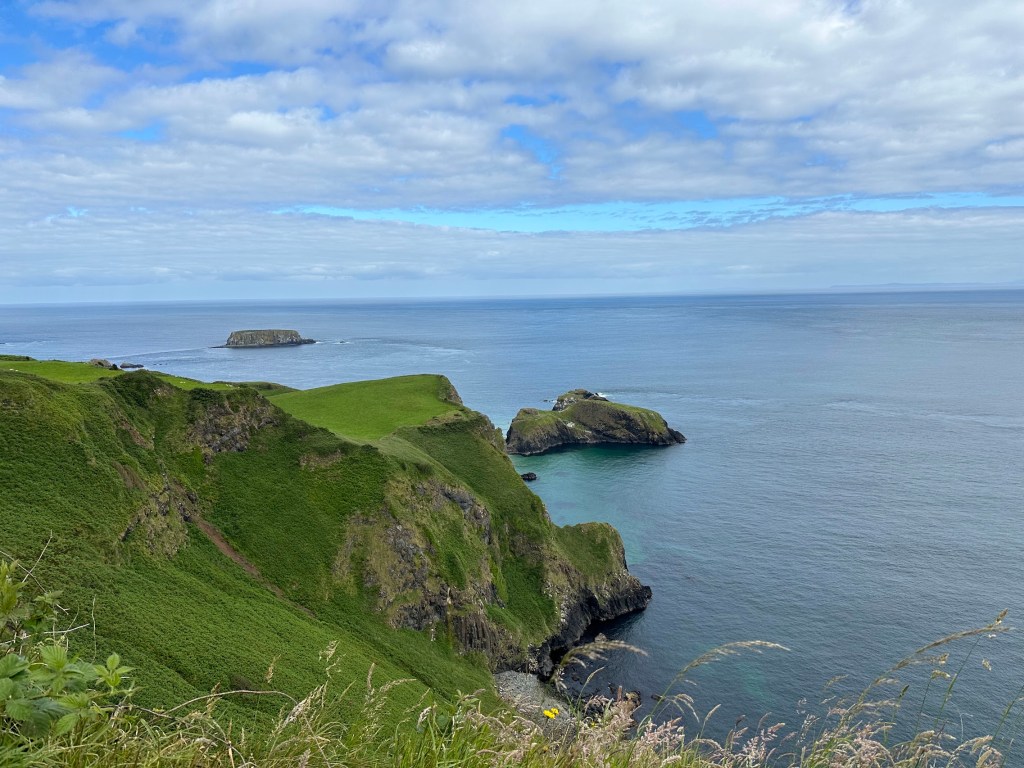
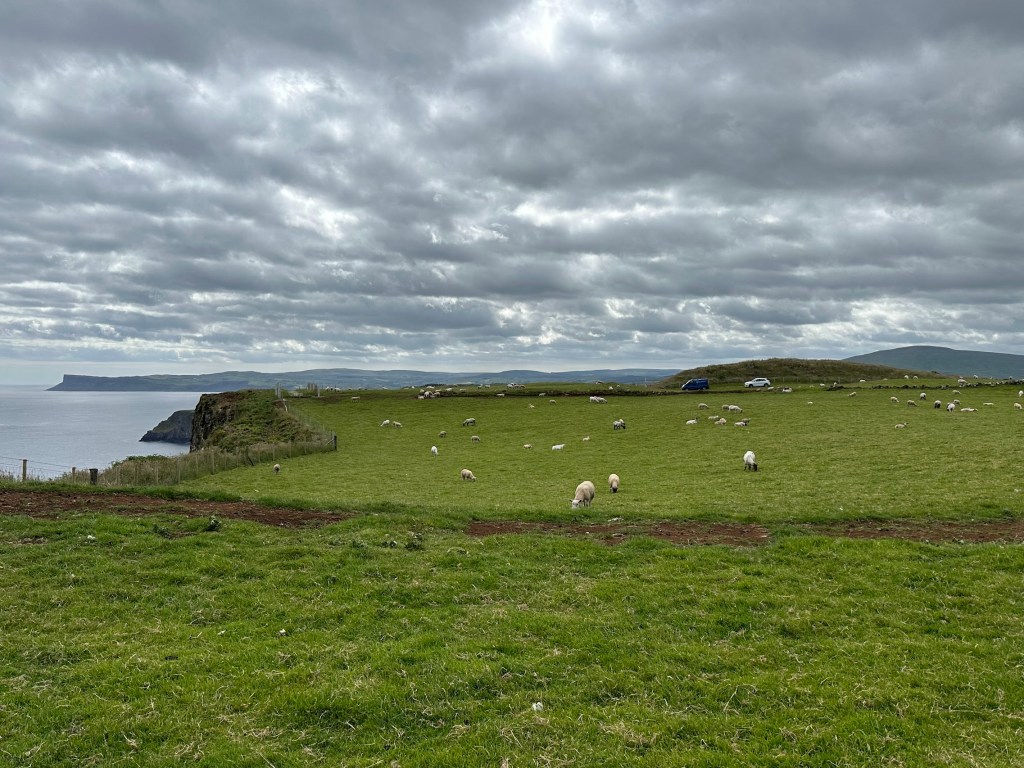
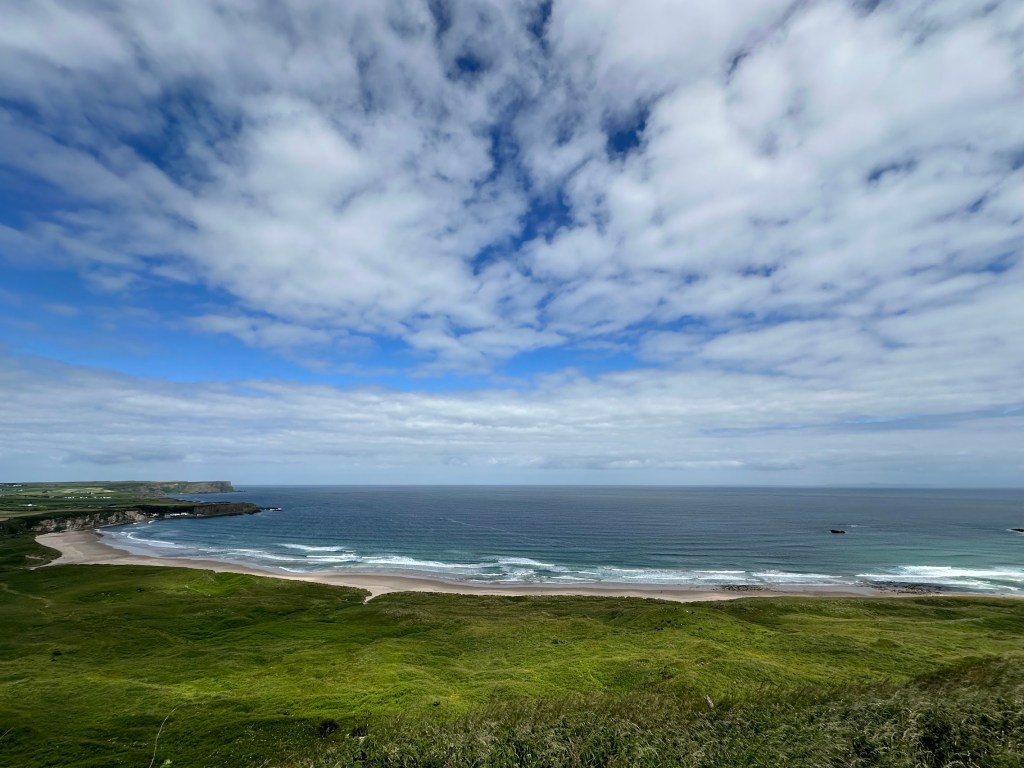
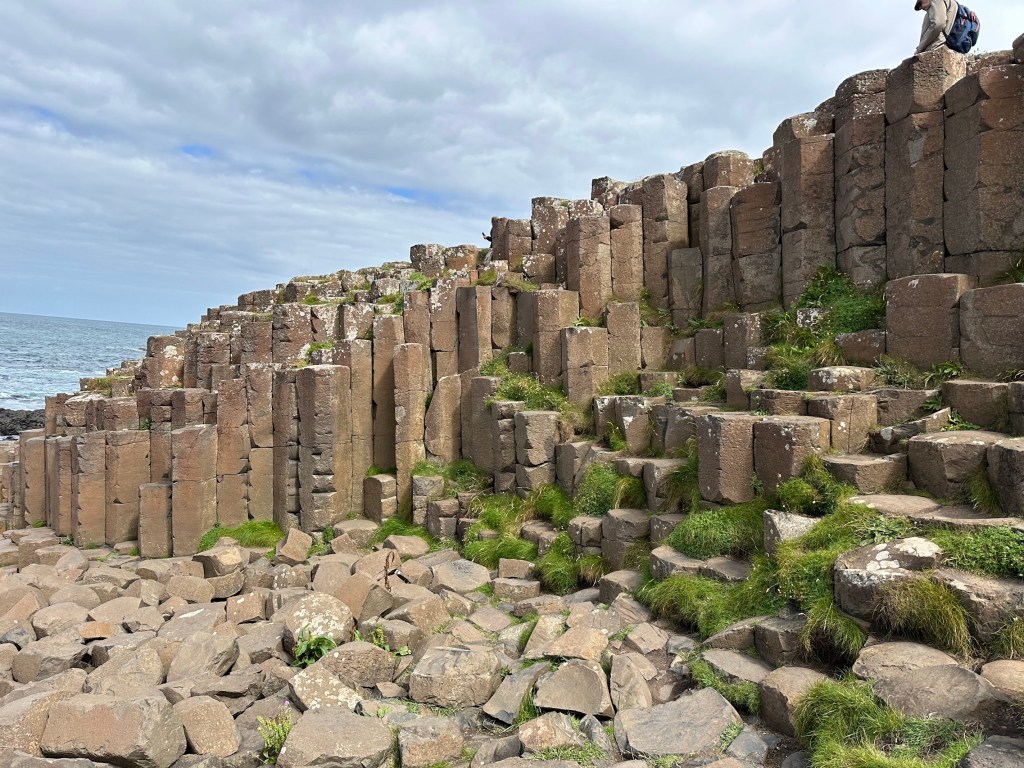
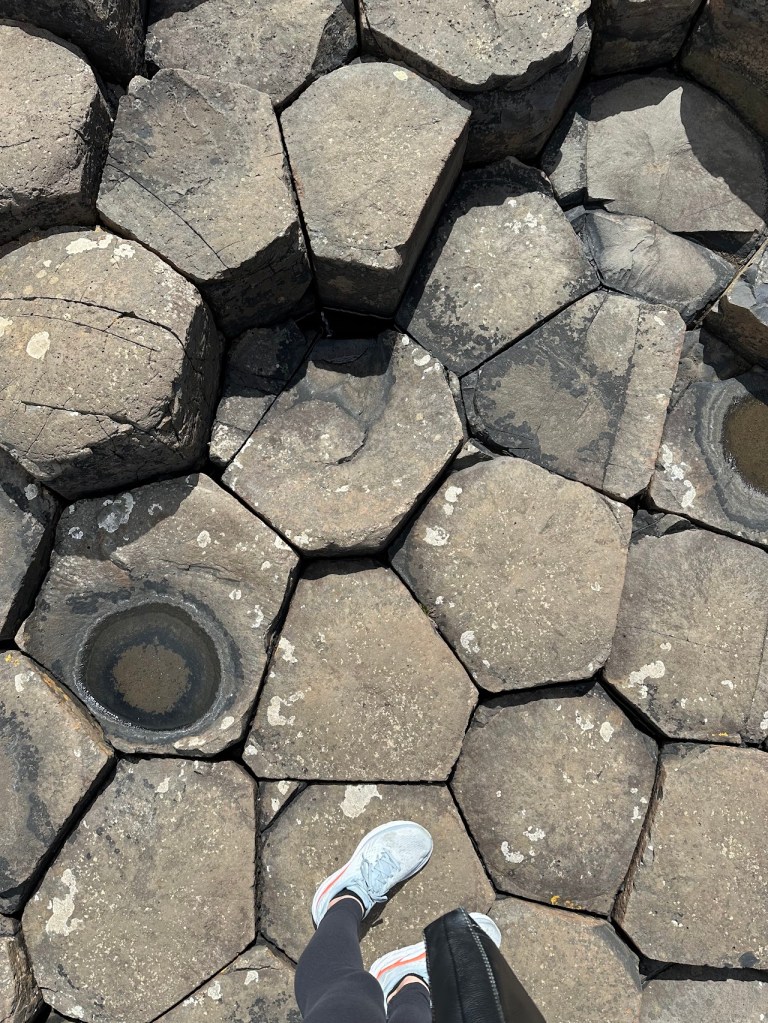
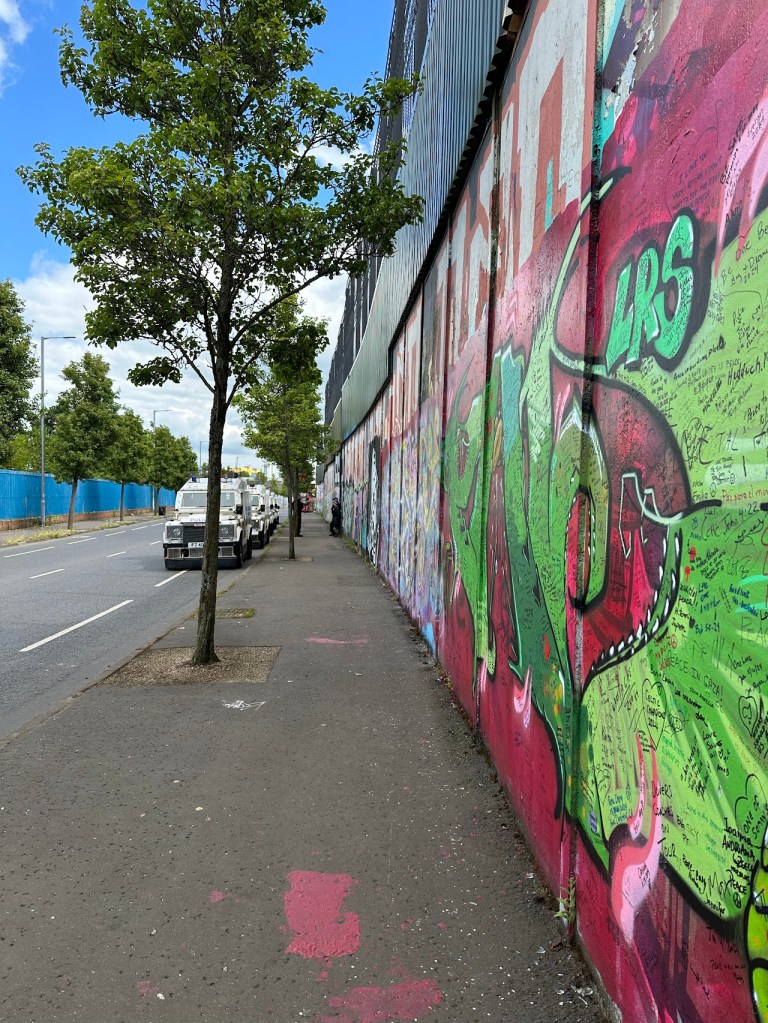
In what was the most expensive activity of our trip, but absolutely the most worth the money, we hired a private driver to takes us through the Northern Ireland countryside to visit a few key landmarks: the Dark Hedges, the coast, Giant’s Causeway, Dunluce Castle, and Bushmill’s Distillery. Since we were a small and agile group (just the two of us!), we had enough time to drive by the Peace Wall inside Belfast and through some historically Protestant/Catholic neighborhoods on the way back. We went through Belfast Tours NI, which is essentially a tour group who contracts out with trusted independent guides/owner-operators. Belfast Tours NI gets a cut that is billed via invoice, and then the rest of the tour is paid in cash directly to the driver at the end. It was a great experience, and our guide was very personable and knowledgable.
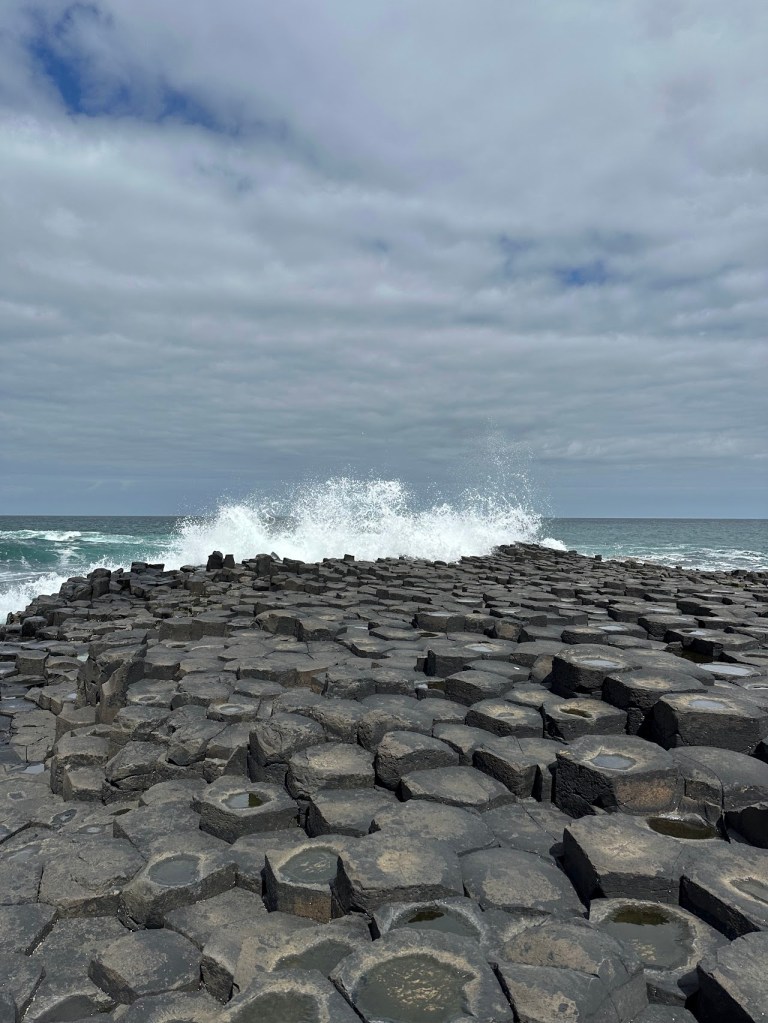
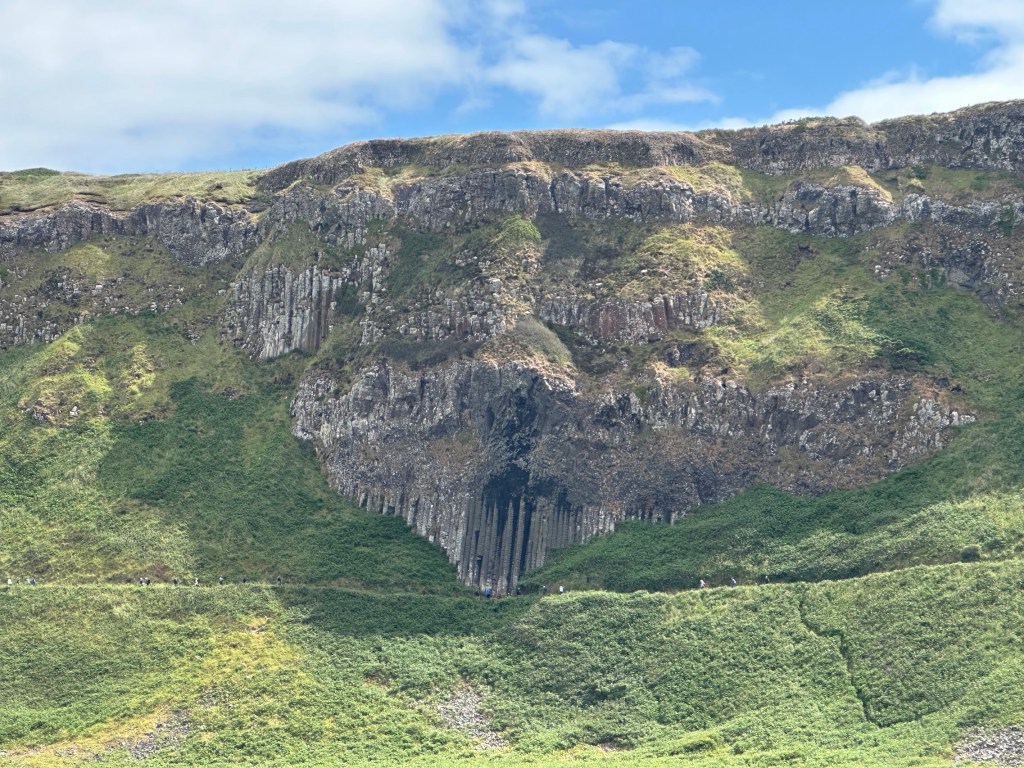
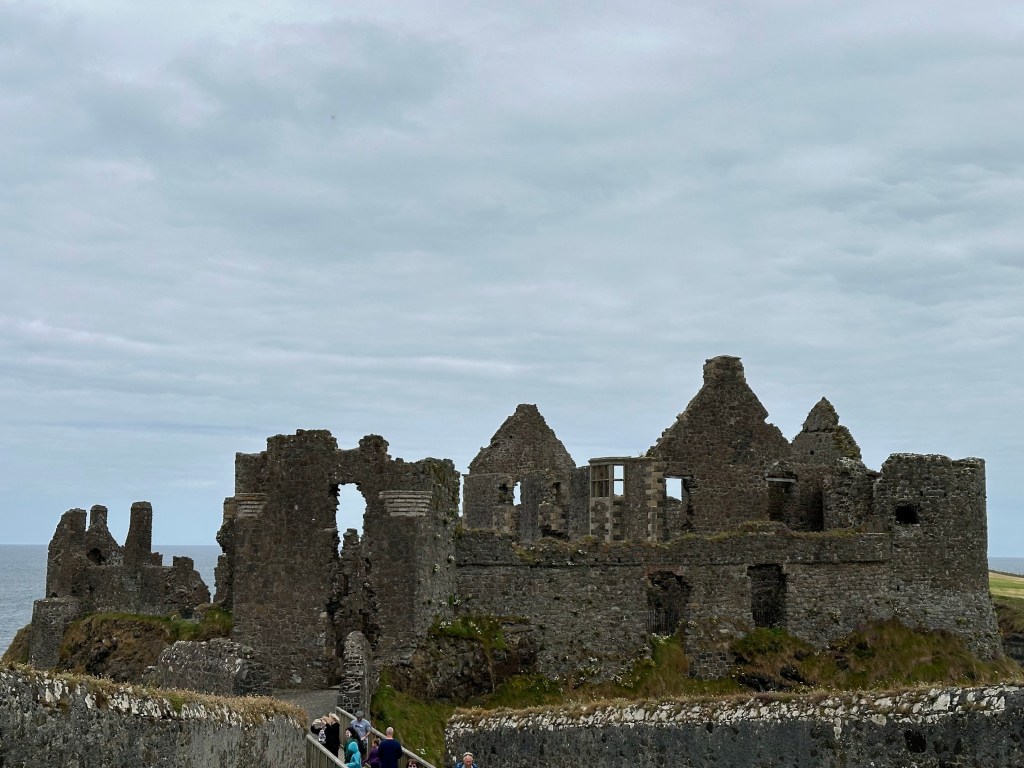
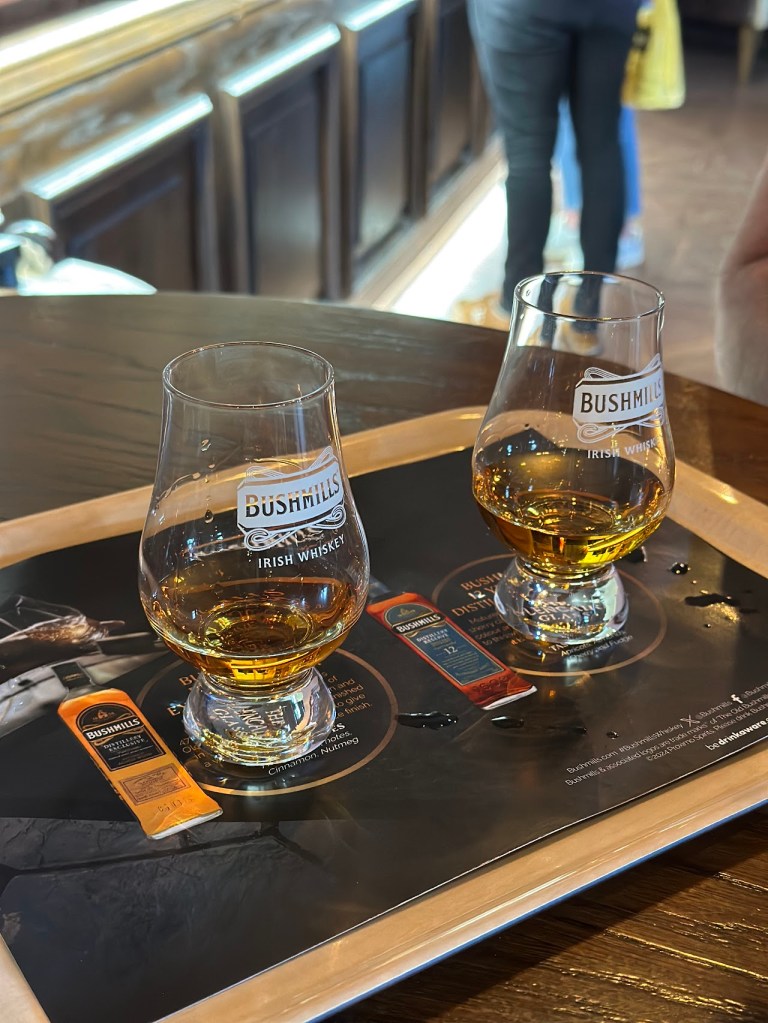
Our last new stop on the trip was Derry/Londonderry, which frankly was only on our radar thanks to the Netflix show Derry Girls. We took a regional train there and got to walk over the Peace Bridge to get to our hotel.
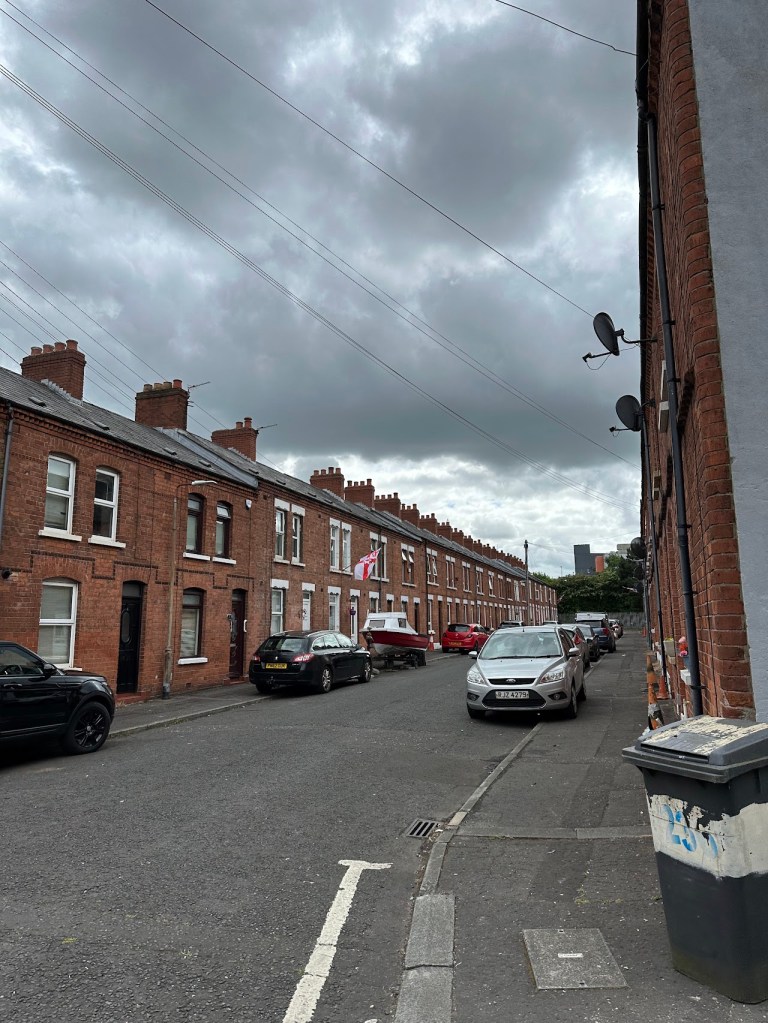
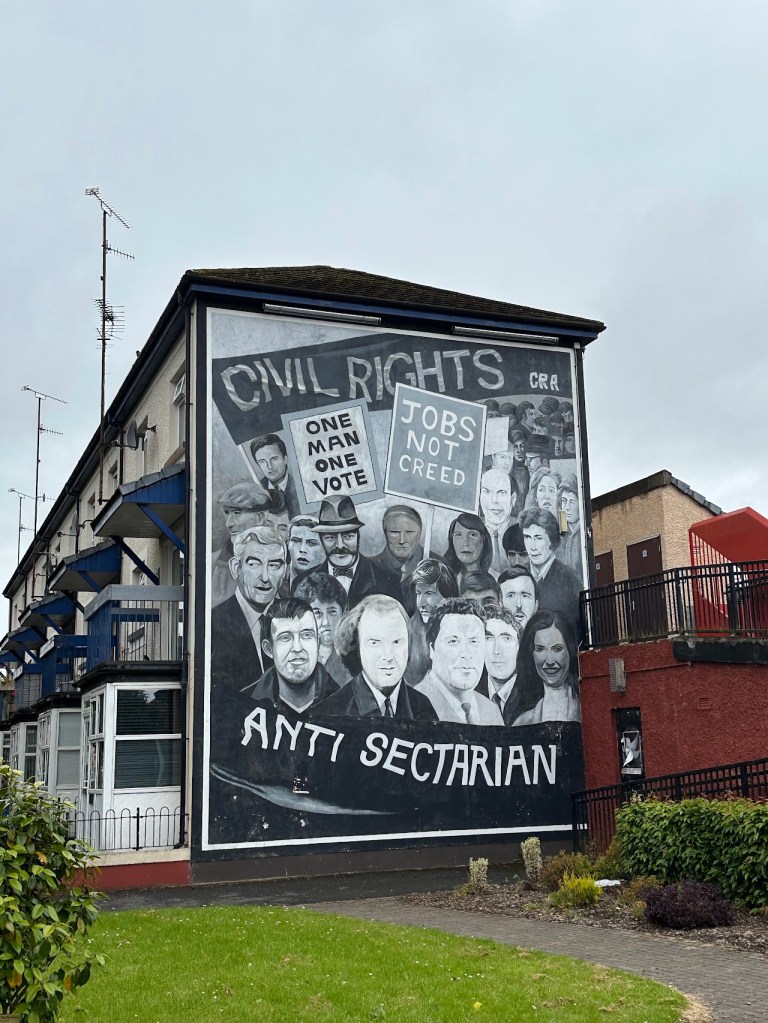
Something I haven’t really touched on, but was vividly apparent in Belfast and equally so in Derry, is that Northern Ireland is still quite religiously segregated. In the picture of the row houses we stayed in, you might have noticed a Union Jack flying. Those were displayed prominently all over the neighborhood, and our driver from the tour mentioned that we were staying in a Protestant neighborhood. The Peace Wall actually divides a Catholic and a Protestant neighborhood, complete with a gate that closes and locks to keep the respective parties away from each other when necessary. Northern Ireland has separate schools, and if they need to build a new school for a Catholic neighborhood, they also must build a new school for a Protestant neighborhood, to avoid the appearance of favoritism. They’ve started doing integrated schooling, but it sounds like it’s a slow process as the enmity that has spanned centuries still hasn’t faded enough for the overall populace to integrate. It was a very strange feeling to see state-sponsored segregation (and doubly so, populace-accepted) and that feeling carried over to Derry, where one side of the river is predominantly Protestant and the other is predominantly Catholic.
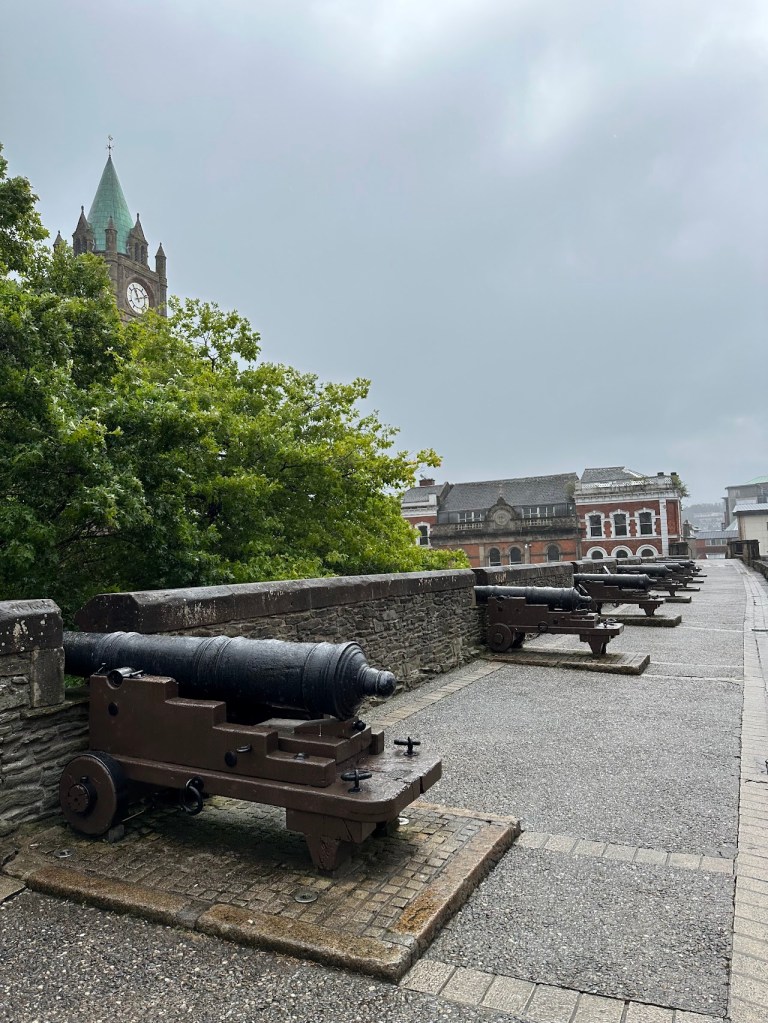
All that being said, Derry is where the infamous Bloody Sunday occurred, so the religious and political tensions are still finely honed there. We visited the Museum of Free Derry, which naturally has a corresponding opposition option of the Siege Museum, though we didn’t get to the latter. Derry was originally a walled city, so we walked the walls and saw some more Cathedrals and the Derry Girls mural, and that was largely the sum of the things available to do in Derry. It probably should have been a day trip.
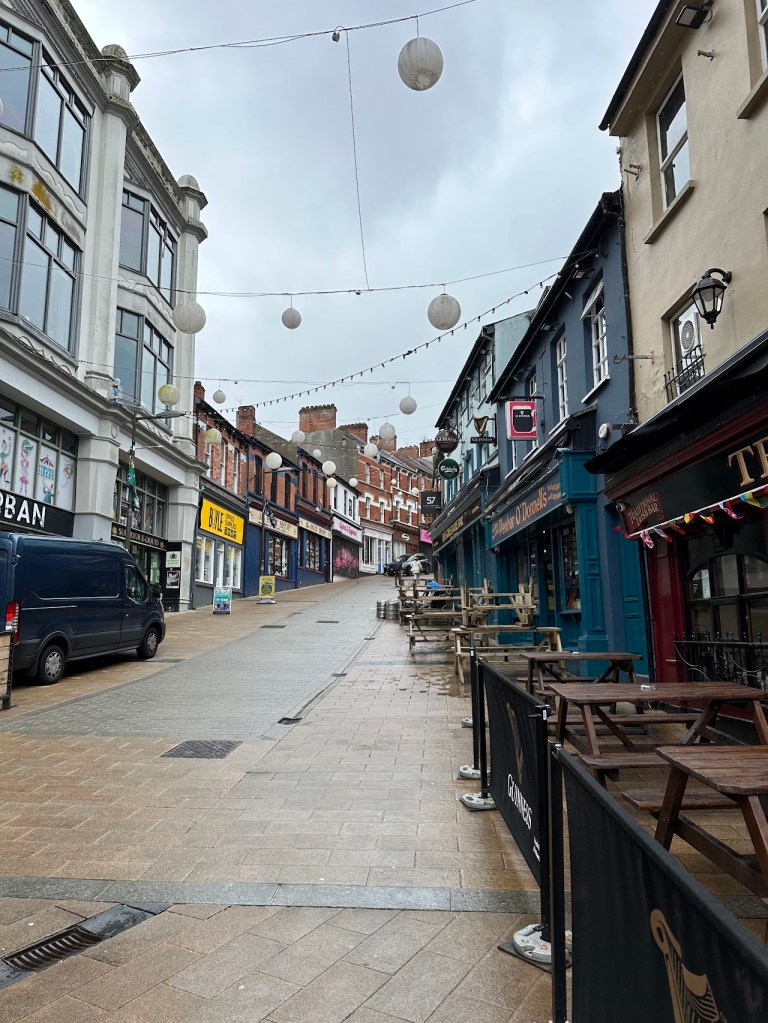
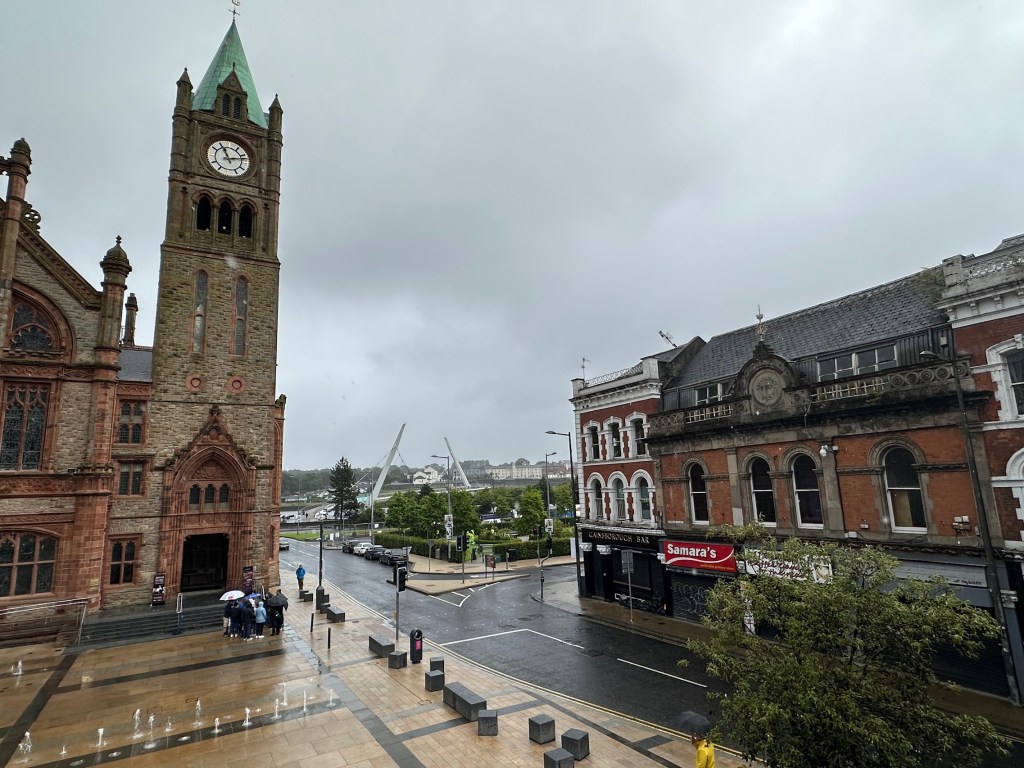
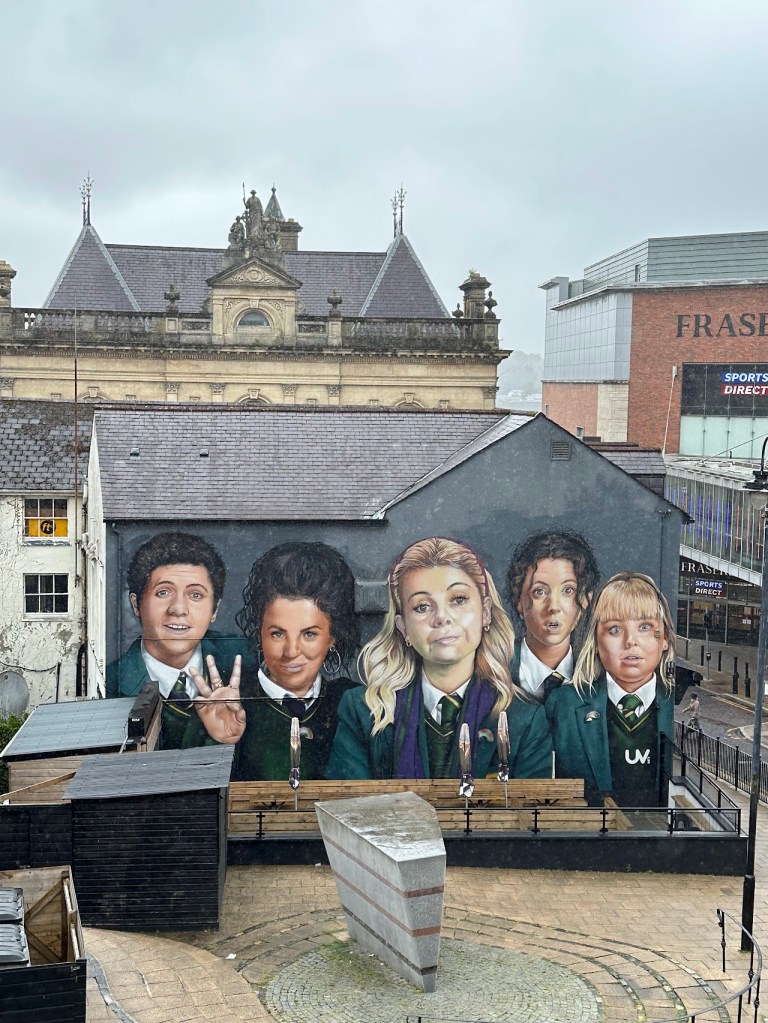
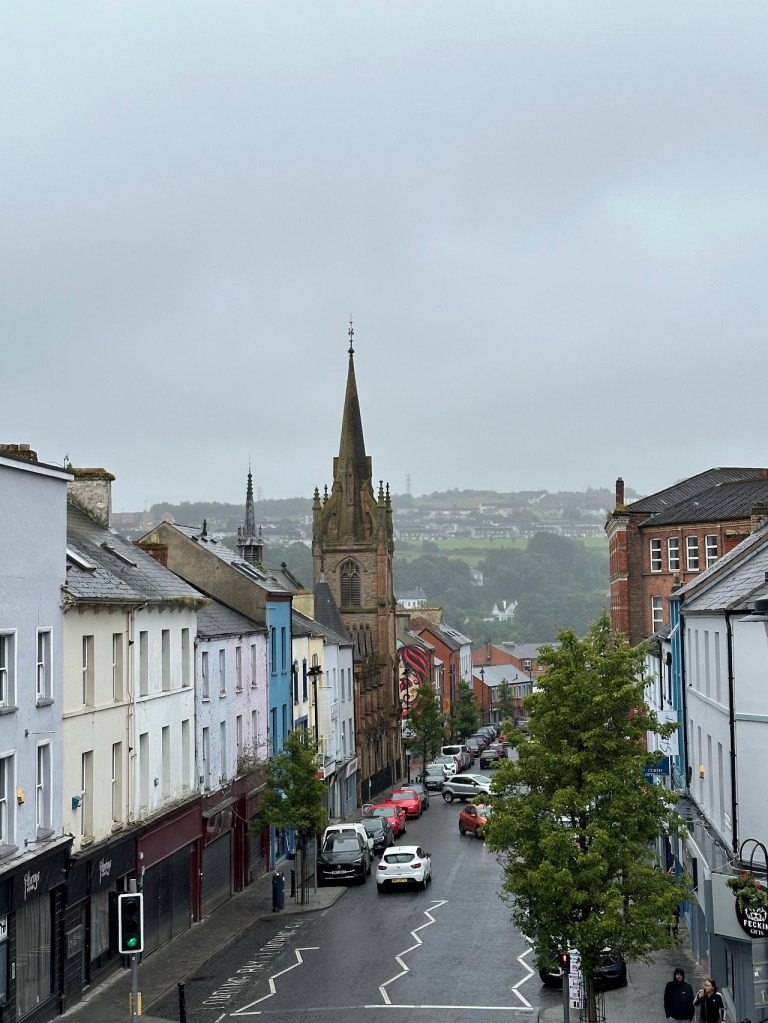
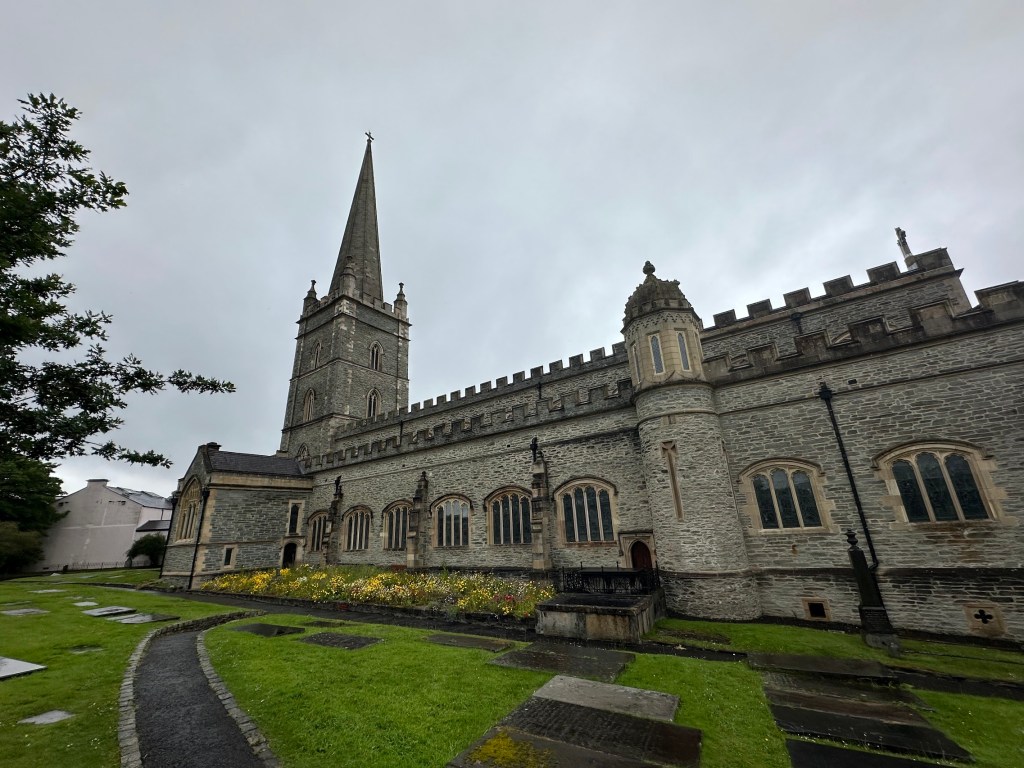
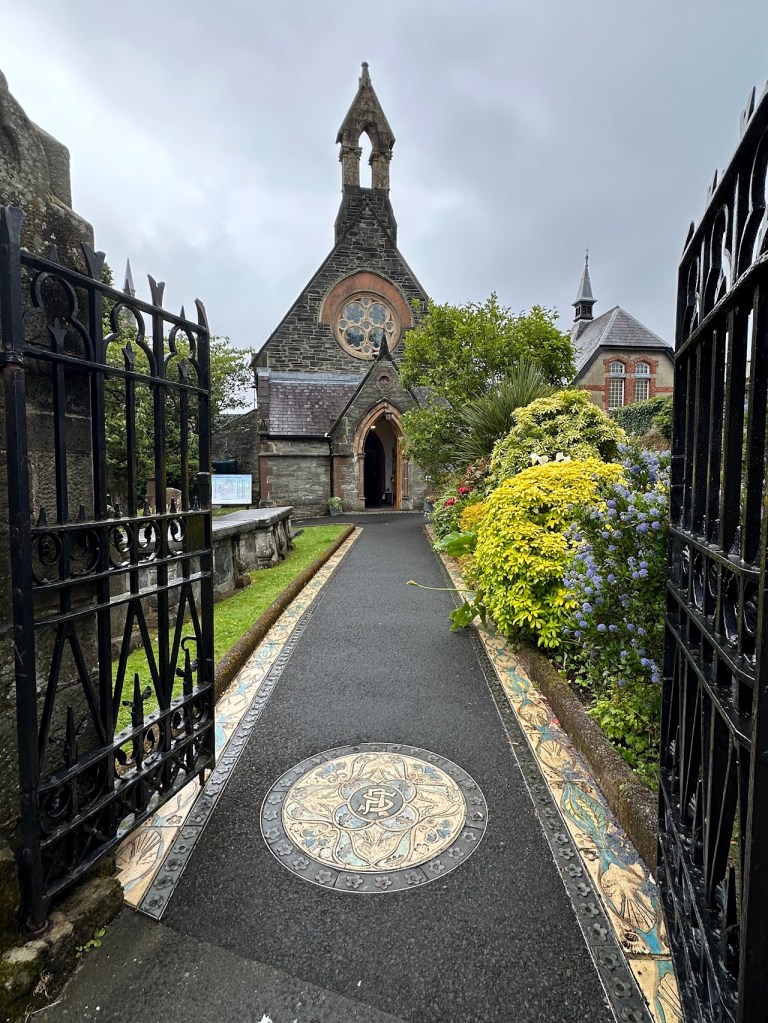
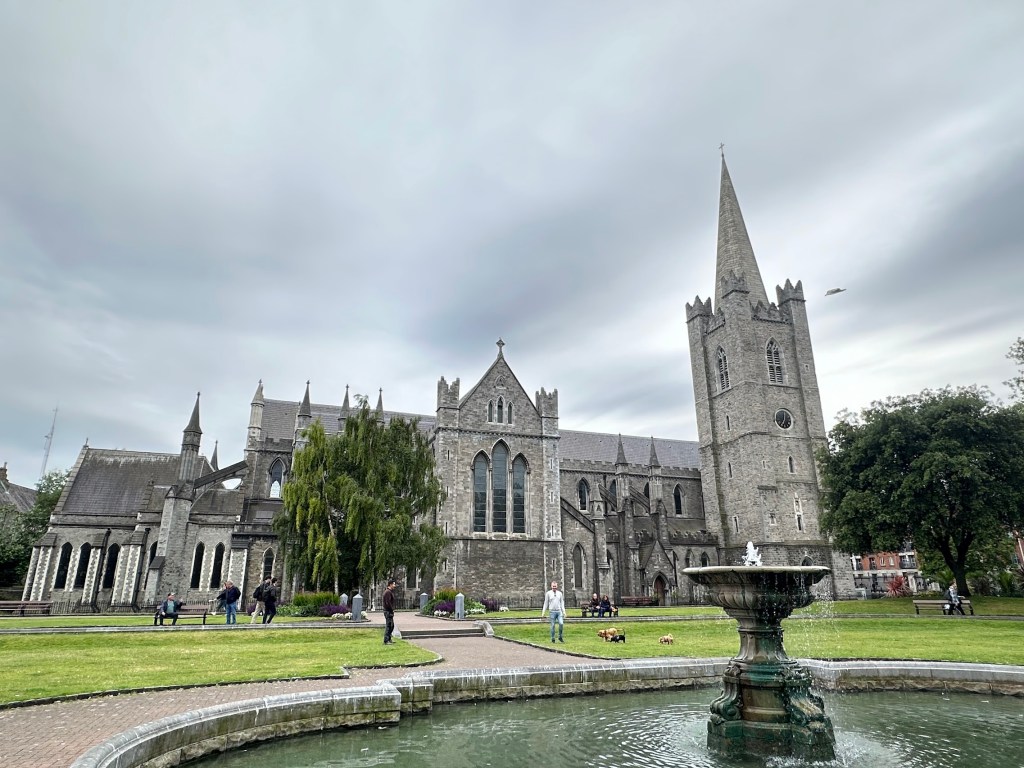
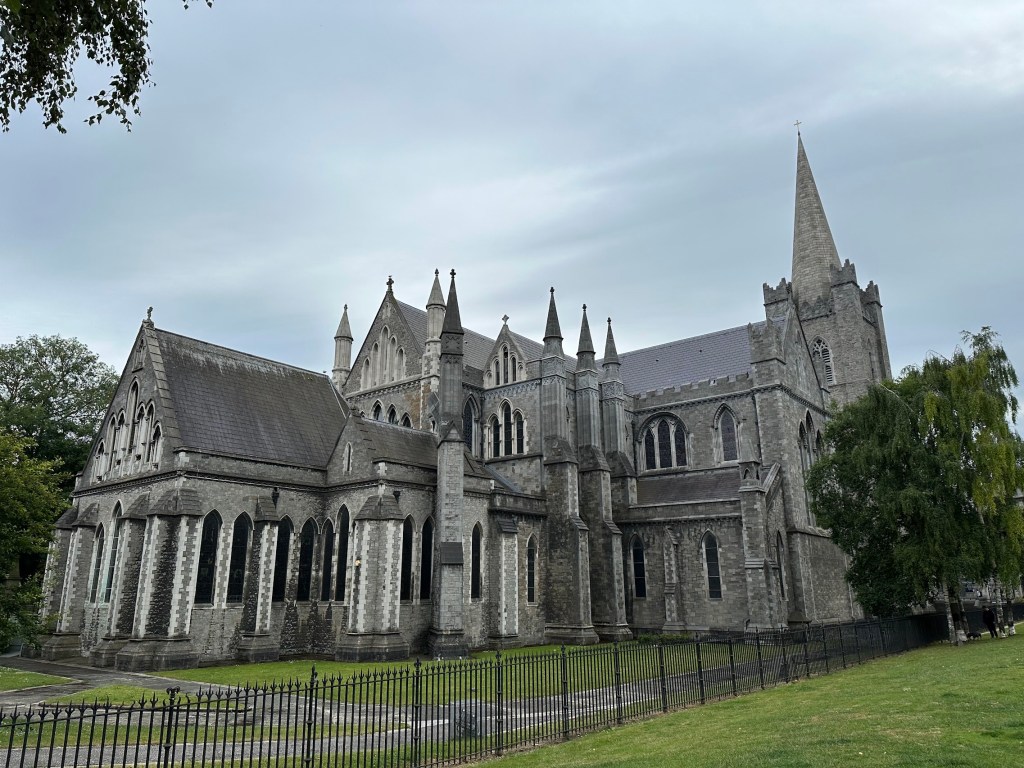
Thankfully, our trip back to Dublin by train was much less eventful than our arrival into Northern Ireland. We immediately got off the train and returned to an excellent Indian restaurant we had discovered our first time there, then took a cab to our hotel. This time, we stayed at a Hyatt Centric with a free night I got from the Brand Explorer award via my Hyatt membership, which was a much nicer hotel in a much nicer area. It was also was right next to Saint Patrick’s Cathedral, which we hadn’t gotten to see on our first pass by Dublin.
And that marks the end of our trip! Ireland had a high bar to meet after Italy, and unfortunately it did not meet it – I keep saying, “Ireland wasn’t as magical as Italy.” That being said, it was still a great trip overall, I felt like we got nearly everything done that I wanted to do (and I was not as sad about missing the Cliffs and the Abbey as I thought I would be), and we got to check two new countries off the list. Next year, our plan is to return to Italy and see some more of the areas we didn’t get to see last time, and then after that … who knows?

 Violet Sky
Leave a reply to Duolingo Italian course: a review – Violet Sky Cancel reply